

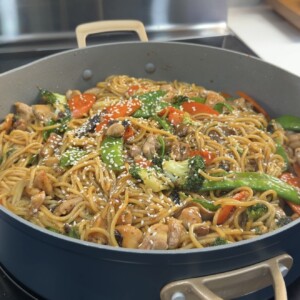
These Chicken Teriyaki Noodles have juicy chicken thighs, vegetables that still have a little bite, and plenty of thick, homemade teriyaki sauce coating every noodle. The sauce is sweet and savory without being watery, and you get a little of everything in each bite. It’s a great weeknight dinner when you’re craving saucy takeout, but want dinner from home.
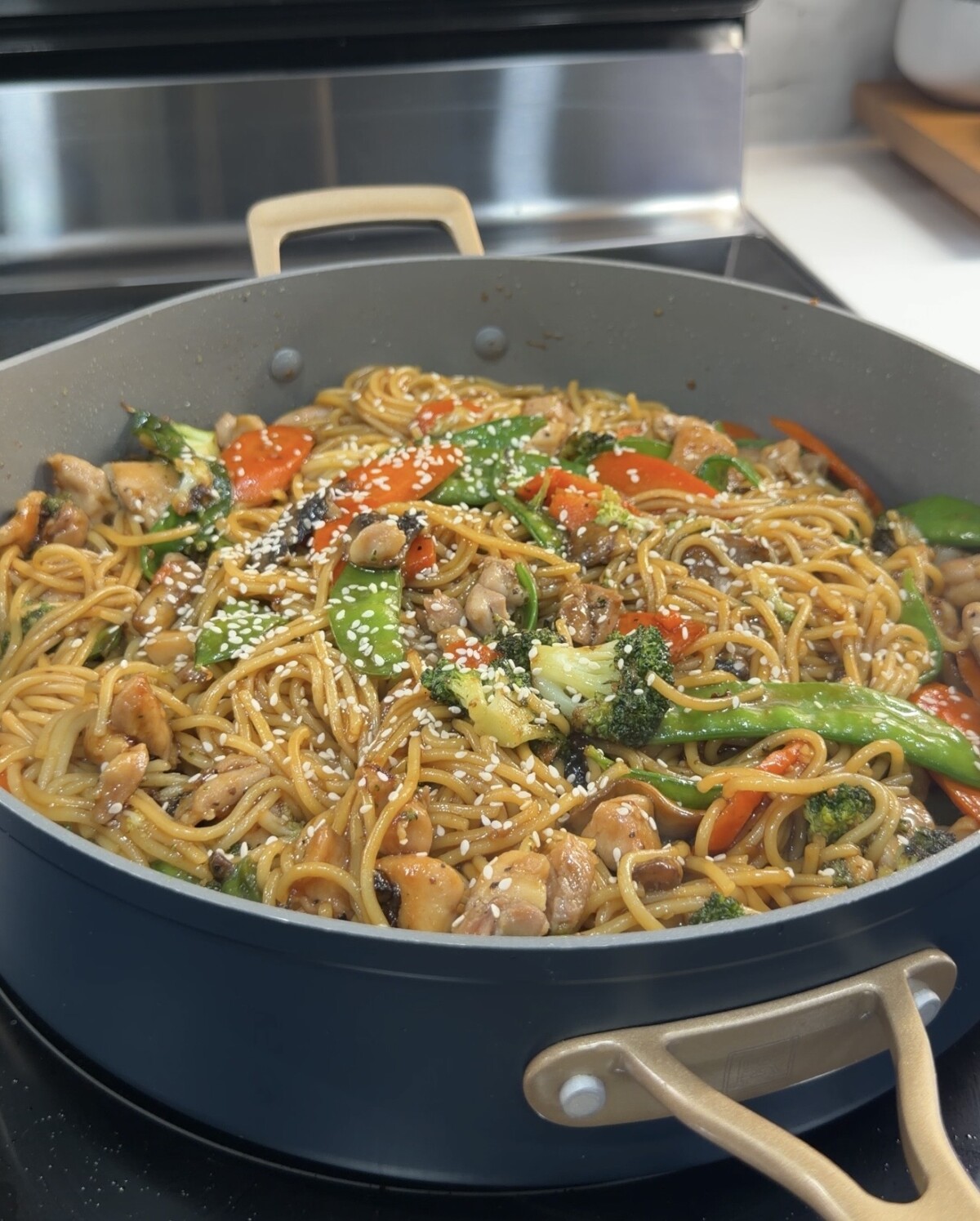
When I developed these chicken teriyaki noodles, I knew I wanted to accomplish a few things. The chicken thighs needed to brown but still stay juicy, the vegetables couldn’t get soggy, and the sauce needed to be thick instead of watery. I’ve spent enough years in the kitchen to know that meant avoiding an overcrowded pan so the chicken wouldn’t steam and the extra moisture from the vegetables could cook off.
As tempting as it is to make this a one-pan dinner (because who wants more dishes?), it really doesn’t give you the best result. Taking the time to brown the chicken thighs, cook the vegetables on their own, and let the sauce thicken separately makes a big difference. You’re not doing anything fancy or complicated. You’re just giving each part a chance to cook the way it needs to.
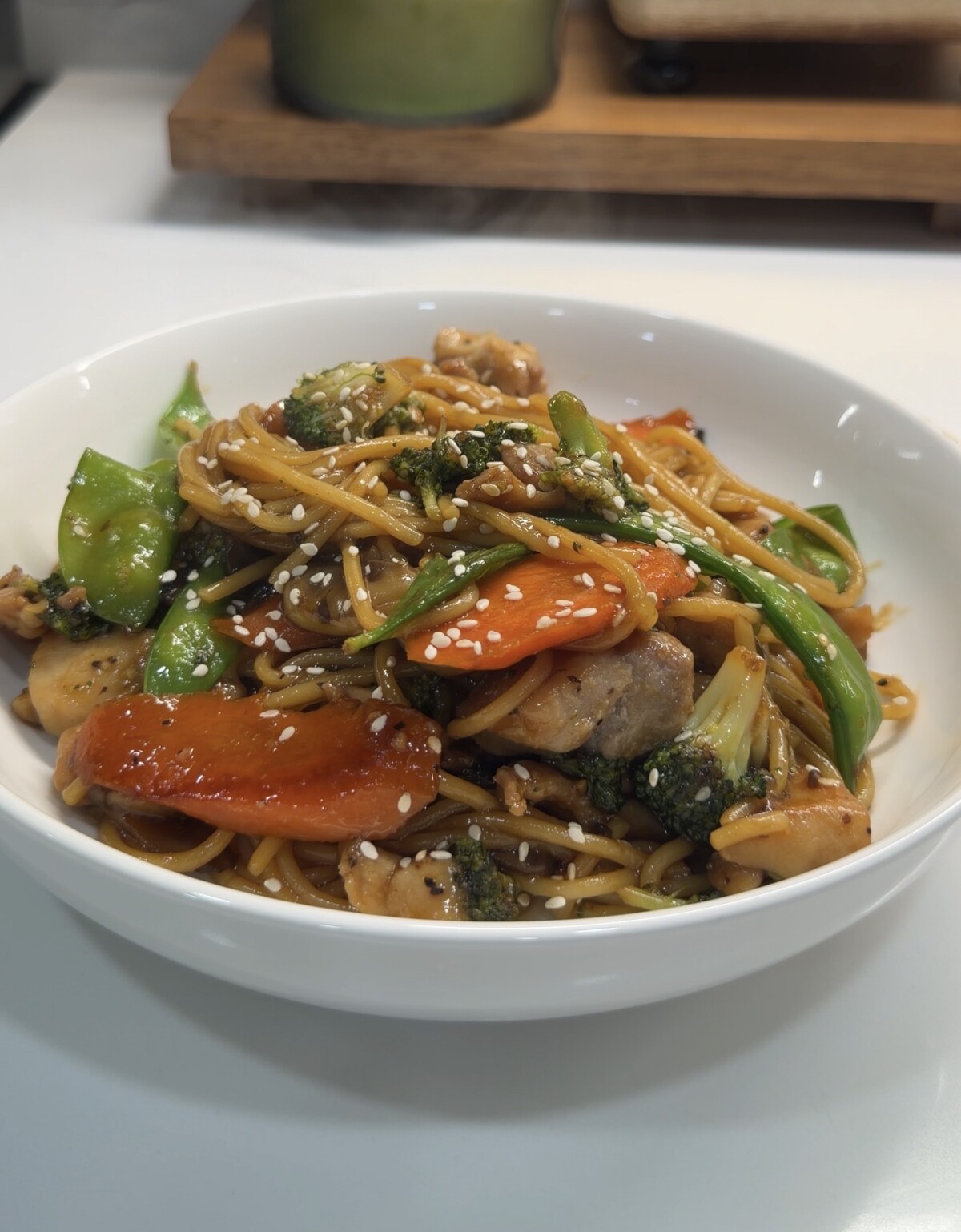
For me, the finished noodles need to have plenty of sauce, but not a puddle of it sitting at the bottom of the bowl. The noodles should be coated, the chicken should be juicy, and the vegetables should still have a bite to them. That’s what you’re going to get here, and it’s worth having a couple of extra dishes.
Why You’ll Love These Teriyaki Chicken Noodles
- The chicken stays juicy. Boneless chicken thighs are great for this because they stay tender even after being browned and tossed with the noodles.
- Plenty of vegetables without the mush. Broccoli, carrots, snow peas, and mushrooms give you a good mix of textures without getting lost in the sauce.
- A homemade sauce worth making. It’s sweet, garlicky, and thick enough to coat the noodles instead of running straight to the bottom of the bowl.
- A full dinner in one bowl. You’ve got chicken, noodles, and vegetables all together, so there’s no need to figure out what to serve alongside it.
Ingredients You’ll Need
Chicken and Seasoning
- Boneless, skinless chicken thighs: My preference for this recipe. They’re forgiving when cooking over higher heat and stay juicier than chicken breasts. You can use chicken breasts, but you’ll need to watch the cooking time more closely.
- Kosher salt and black pepper: Season the chicken itself so you’re not relying entirely on the teriyaki sauce for flavor.
- Garlic powder and onion powder: Both season the chicken without adding extra moisture to the skillet.
- Ground ginger: You’ll use this to season the chicken and again in the sauce. Ground ginger works well here, and there’s no need to buy fresh ginger.
- Avocado oil: I like using a neutral oil that handles higher heat well. Another neutral cooking oil will work if that’s what you have.
Vegetables
- Broccoli florets: Fresh broccoli works well here. Keep the florets fairly small, so they’re easy to eat with the noodles.
- Carrots: Regular carrots are great. Thinly sliced carrots cook more evenly alongside the other vegetables.
- Snow peas: These stay a little crisp when cooked, which is exactly what I want in this recipe. Sugar snap peas are also an option, although they’re thicker and may need a little longer to cook.
- Mushrooms: White button or cremini mushrooms both work well. They soak up some of the sauce and give you a nice savory bite throughout the noodles.
Noodles
- Thin spaghetti: Yes, regular thin spaghetti! It’s easy to find, affordable, and works really well with the thick teriyaki sauce. You don’t need to hunt down a specialty noodle to make this recipe. Lo mein noodles are another good option if you’d rather use those.
Homemade Teriyaki Sauce
- Soy Sauce: I highly recommend low sodium sauce since you’re using a full cup. Regular soy sauce can make the finished dish pretty salty.
- Brown sugar: Gives the sauce its sweetness and helps it get that familiar teriyaki flavor.
- Honey: Adds a little more sweetness and gives the finished sauce a nice glossy appearance.
- Minced garlic: I use a generous amount here because I want the garlic to come through even after everything gets tossed with the noodles.
- Ground ginger: Gives the sauce that familiar gingery teriyaki flavor.
- Cornstarch and water: These make the slurry that thickens the sauce. Cornstarch is what helps you get a sauce that clings to the noodles.
For Serving
- Sesame seeds: Optional, but I like the little bit of crunch they add on top.
Step-by-Step Instructions
- Season the chicken. Cut chicken thighs into bite-size pieces, then season with coarse kosher salt, black pepper, garlic powder, onion powder, and ground ginger.
- Brown the chicken. Heat the avocado oil in a large skillet over medium-high heat. Add the chicken in a single layer and let it brown before stirring. Cook until browned and cooked through, then transfer to a plate.
- Cook the vegetables. Add the broccoli, carrots, snow peas, and mushrooms to the same skillet. Cook until the vegetables are tender but still have a little bite, and any extra moisture has cooked off. Remove from the skillet and set aside.
- Cook the noodles. Bring a large pot of salted water to a boil and cook the thin spaghetti according to the package directions. Drain and set aside.
- Make the teriyaki sauce. Combine the soy sauce, brown sugar, honey, minced garlic, and ground ginger in a small saucepan. Bring to a gentle simmer, then stir in the cornstarch and water slurry. Continue cooking until the sauce is thick and glossy.
- Toss it all together. Return the chicken, vegetables, and noodles to the skillet. Pour the teriyaki sauce over everything and toss until well coated and warmed through.
- Finish and serve. Remove from the heat, sprinkle with sesame seeds, and serve while hot.
Kara’s Tips
- Use a big skillet. You’ve got a pound of chicken, quite a few vegetables, and 12 ounces of pasta going into this recipe. You need enough room to toss everything together without noodles going everywhere. If your skillet isn’t big enough, you can use a large pot for that final step.
- Give the chicken room to brown. Depending on the size of your skillet, you may need to cook the chicken in batches. You don’t have to fuss with it constantly. Let it sit long enough to get some color before you start moving it around.
- Watch the noodles. Since they’ll be going back into the skillet with the hot sauce, you don’t want to overcook them in the boiling water. I prefer them just tender so they don’t end up too soft once everything is combined.
- Don’t keep cooking once everything is coated. Once the noodles, chicken, and vegetables are hot and covered in sauce, you’re done. Leaving the skillet over the heat too long can make the sauce overly thick and sticky.
Storage & Reheating
Refrigerator
Store leftover chicken teriyaki noodles in an airtight container in the refrigerator for up to 4 days. Refrigerate promptly, within 2 hours of cooking.
The noodles will absorb some of the sauce as they sit, so don’t be surprised if they look a little drier the next day.
Reheating
Stovetop: Add the noodles to a skillet over medium-low heat with a splash of water. Stir gently until everything is heated through.
Microwave: Place a serving in a microwave safe bowl with a splash of water. Cover loosely and heat in short intervals, stirring in between so the noodles warm evenly.
For either method, reheat leftovers to 165°F.
Freezing
I don’t recommend freezing this recipe. The vegetables and noodles can become too soft after thawing, and you lose the texture that makes this dish so good.
Frequently Asked Questions
Yes, but chicken thighs are more forgiving and stay juicier. If using chicken breast, cut it into evenly sized pieces and be careful not to overcook it, as it can dry out more quickly.
No, not at all. The teriyaki sauce is sweet and savory without being spicy. If you want some heat, you can add red pepper flakes or chili oil to your individual serving.
Yes. If you’d like a vegetarian version, you can use tofu or just add more vegetables in place of the chicken. Firm or extra-firm tofu is your best bet if you want something that will hold up when tossed with the noodles. Keep in mind that you’ll need to season and cook it differently than the chicken.
The sauce will continue to thicken as it cools, and the noodles will absorb some of it once everything is mixed together. If it’s thicker thank you’d like, stir in a small splash of water until it’s back to the consistency you want.
More Dinners You Might Like
- Pizza Casserole
- Shrimp Fried Rice
- Southwest Chicken & Rice Skillet
- General Tso’s Chicken
- More Chicken Recipes
- Easy Chicken Skillet Dinner
- Beef Teriyaki
- Teriyaki Salmon Bowls
Pin this now to find it later
Pin It
Chicken Teriyaki Noodles
Ingredients
Chicken
- 1 pound boneless skinless chicken thighs, cut into bite-size pieces
- 1 teaspoon coarse kosher salt
- ½ teaspoon black pepper
- 1 teaspoon garlic powder
- 1 teaspoon onion powder
- ½ teaspoon ground ginger
- 1 tablespoon avocado oil
Vegetables
- 1½ cups broccoli florets
- 3 medium carrots peeled and sliced
- 1 cup snow peas
- 8 ounces mushrooms sliced
Noodles
- 12 ounces thin spaghetti
Teriyaki Sauce
- 1 cup low sodium soy sauce
- ½ cup brown sugar
- 2 tablespoons honey
- 2 tablespoons minced garlic
- 2 teaspoons ground ginger
- 2 tablespoons cornstarch
- 2 tablespoons water
For Serving
- Sesame seeds for garnish
Instructions
- Cut the chicken thighs into bite-size pieces and season with salt, pepper, garlic powder, onion powder, and ground ginger.
- Heat a large skillet over medium-high heat and add avocado oil. Add the chicken in a single layer and cook until browned and cooked through. Remove and set aside.
- In the same skillet, add the broccoli, carrots, snow peas, and mushrooms. Cook until crisp-tender and the moisture has cooked off. Remove and set aside.
- Bring a large pot of salted water to a boil and cook the thin spaghetti according to package directions. Drain and set aside.
- In a small saucepan, combine the soy sauce, brown sugar, honey, garlic, and ginger. Bring to a gentle simmer, then stir in the cornstarch slurry. Cook until thick and glossy.
- Return the chicken, vegetables, and noodles to the skillet. Pour the sauce over the top and toss until evenly coated and warmed through.
- Remove from heat and sprinkle with sesame seeds before serving.
Video
Notes
- Chicken thighs are recommended because they stay juicy and flavorful, but chicken breast can be used if cooked carefully.
- Cook the chicken and vegetables in batches if needed to avoid overcrowding the pan.
- Toss everything together off the heat to prevent the sauce from over-reducing or becoming sticky.
- If reheating leftovers, add a small splash of water or soy sauce to loosen the noodles.
Nutrition
Nutrition information is automatically calculated, so should only be used as an approximation.










A hit at my household it never disappoints
Do you offer a vegetarian similar version of this delicious recipe ?
Hi Andy! You can easily make this vegetarian by swapping out the chicken. Tofu, tempeh, or even just extra veggies all work really well with the teriyaki sauce and noodles. Just prepare them the same way you would normally and add them in!
This one went straight into our regular dinner rotation. The chicken stays juicy, the veggies keep their bite, and that teriyaki sauce actually coats everything instead of pooling at the bottom of the pan. I really liked using chicken thighs here. They’re forgiving, flavorful, and don’t dry out even if dinner gets slightly delayed.