





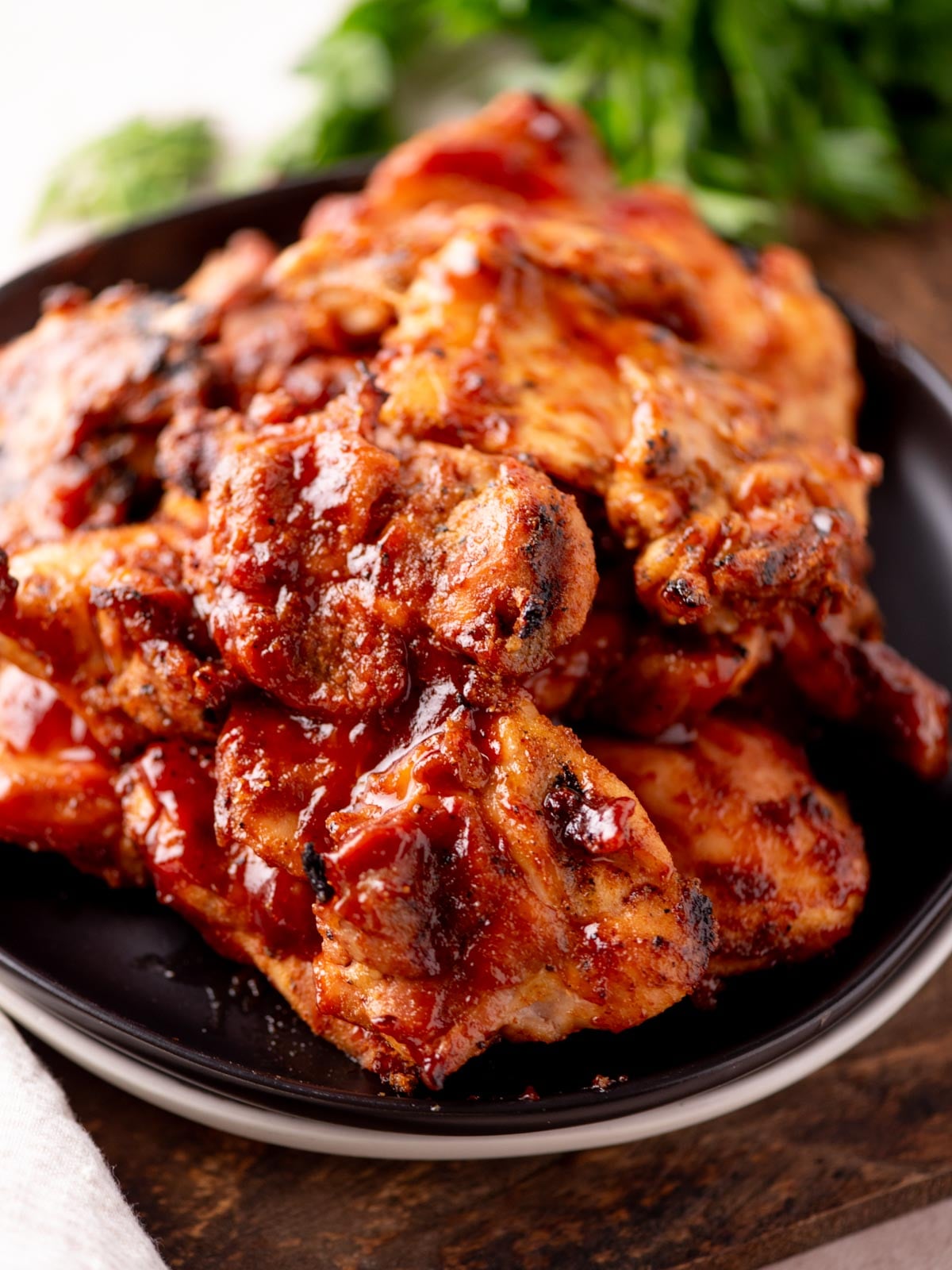
These grilled BBQ chicken thighs get seasoned before the barbecue sauce ever goes on, so you’re not depending on sauce to do all the work. The boneless chicken thighs stay juicy on the grill, with smoky, peppery seasoning underneath and a sticky layer of barbecue sauce caramelized over the top. This is backyard dinner food for the stretch of the year when the grill is doing most of the cooking anyway.
Why These Grilled Chicken Thighs Work
Being from Texas, barbecue sauce alone is never going to be enough seasoning for me. The chicken itself needs to taste good before that sauce ever touches it, especially when you’re grilling boneless thighs that cook pretty quickly. The dry rub gives these enough seasoning to matter without trying to turn chicken thighs into a twelve-hour barbecue project.
There’s also a reason the sauce waits until the chicken is nearly done. Barbecue sauce has enough sugar in it to burn long before the chicken finishes cooking if you brush it on from the beginning. Giving the thighs most of their time on the grill with just the dry rub lets them brown first, then those last few minutes give you the sticky, slightly charred edges you actually want.
Why You’ll Love These BBQ Chicken Thighs
- The chicken is seasoned underneath the sauce. Even the bites without much barbecue sauce still taste really good.
- The sauce gets sticky instead of burnt. It goes on during the last few minutes, just long enough to caramelize instead of sitting there burning.
- They stay juicy on the grill. Chicken thighs are much more forgiving than boneless chicken breasts.
- The rub is smoky and peppery without being overly sweet. There’s only enough brown sugar to help with browning, not enough to make the chicken taste sugary.
Ingredients for Grilled BBQ Chicken Thighs
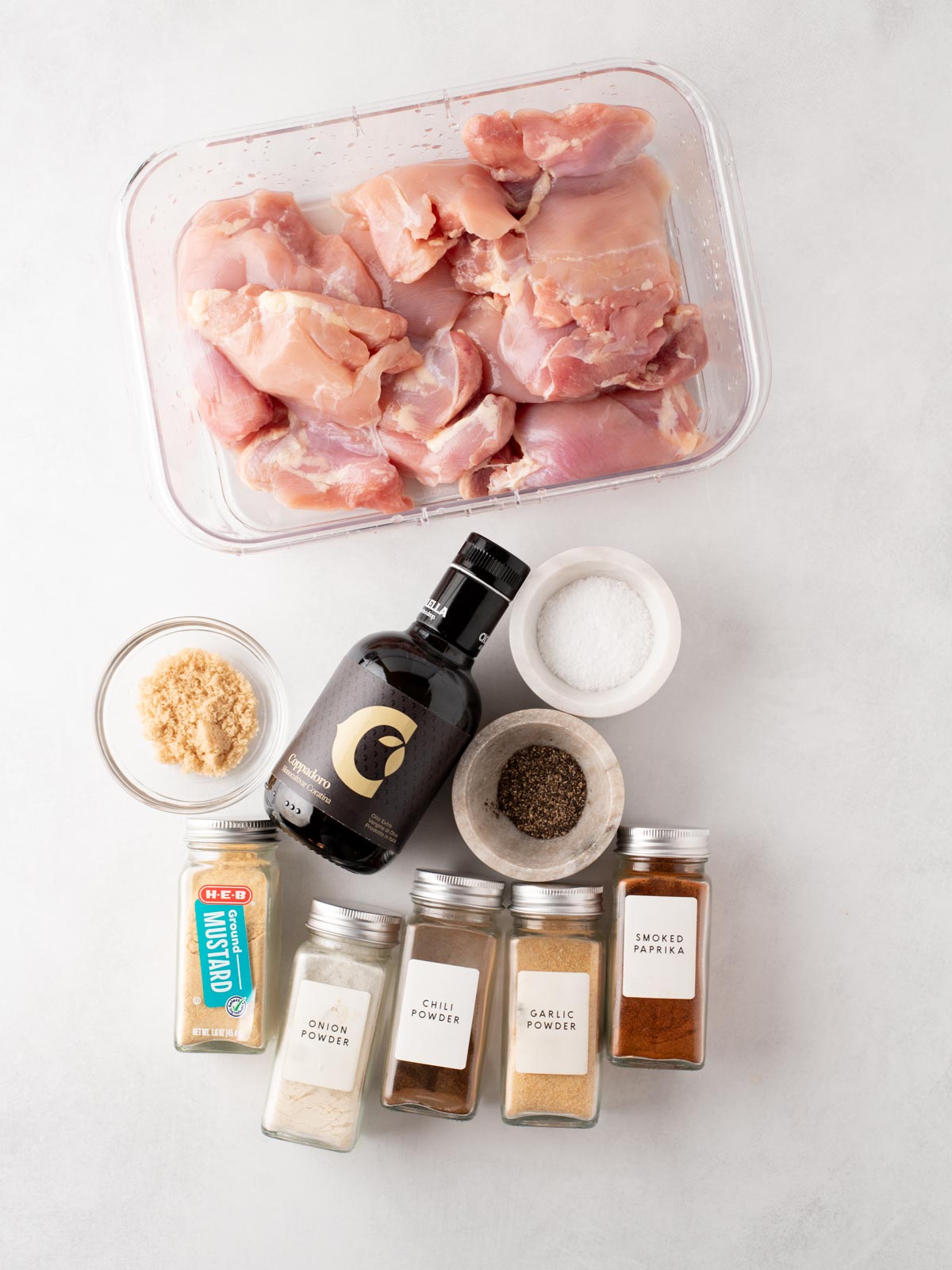
- Boneless skinless chicken thighs: Boneless thighs are my pick here because they cook quickly but have enough fat to stay tender over the grill. Try to buy thighs that are fairly similar in size so they finish cooking at about the same time.
- Olive or avocado oil: A little olive oil helps the dry rub stick evenly to the chicken and keeps the surface from drying out on the grill. If you’re going for a really neutral taste, grab avocado oil.
- Kosher salt: Kosher salt seasons the chicken itself instead of leaving all the flavor to the barbecue sauce. Don’t grab regular table salt. You want to grab that coarse kosher salt.
- Smoked paprika: This is where a lot of that smoky flavor comes from. Make sure you’re using smoked paprika rather than regular paprika for this one.
- Garlic powder: Garlic powder works better than fresh garlic on a hot grill because you get the garlic flavor without little pieces of garlic scorching on the outside. Using fresh can cause the outside to taste bitter.
- Onion powder: This adds savory onion flavor throughout the rub without adding anything that can burn or fall through the grill grates.
- Chili powder: Use a standard chili powder here. It’ll give the rub the Texas-style chili flavor without making the chicken spicy.
- Black pepper: It matters in this rub. It gives the chicken a peppery bite that keeps the sauce from tasting too sweet.
- Brown sugar: There isn’t much brown sugar, just enough to help the outside brown and work with the barbecue sauce once it goes on.
- Mustard powder: Dry mustard gives the rub just a little sharpness without making the finished chicken taste like mustard.
- Cayenne pepper: This is optional. The small amount gives the chicken a little bit of heat, but you can leave it out if you’re feeding people who don’t want anything spicy.
- Barbecue sauce: Use a barbecue sauce you already like because it will be a flavor you notice. A thicker sauce works especially well here because it clings to the chicken and will get sticky during those few minutes on the grill.
How to Grill Boneless Chicken Thighs
Get the grill hot.
Preheat your grill to medium-high heat, around 400°F. Give the grates time to fully heat before adding the chicken.
Season the chicken.
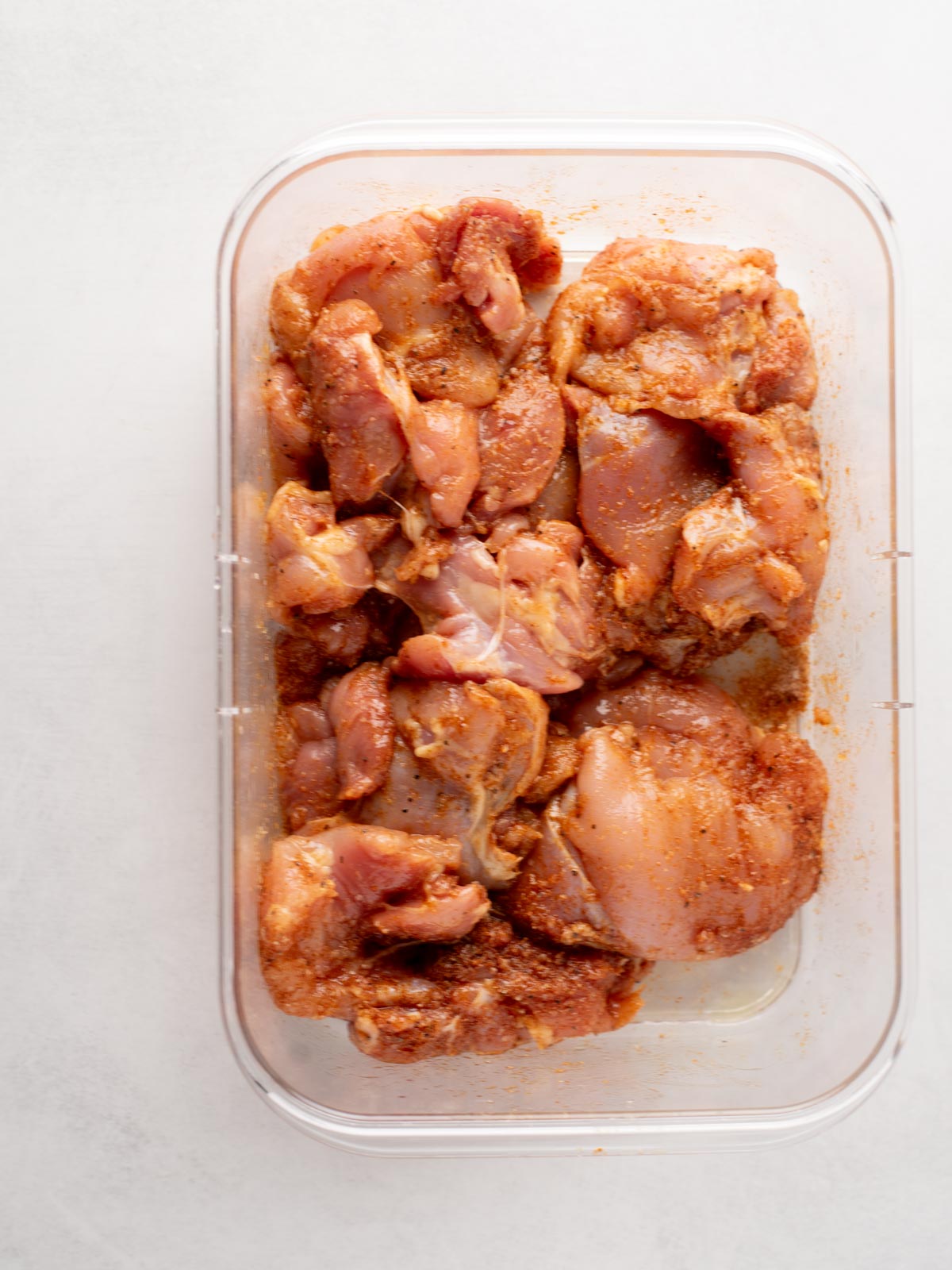
Pat the chicken thighs dry with paper towels and place them in a large bowl. Drizzle them with the olive oil and toss until they’re lightly coated.
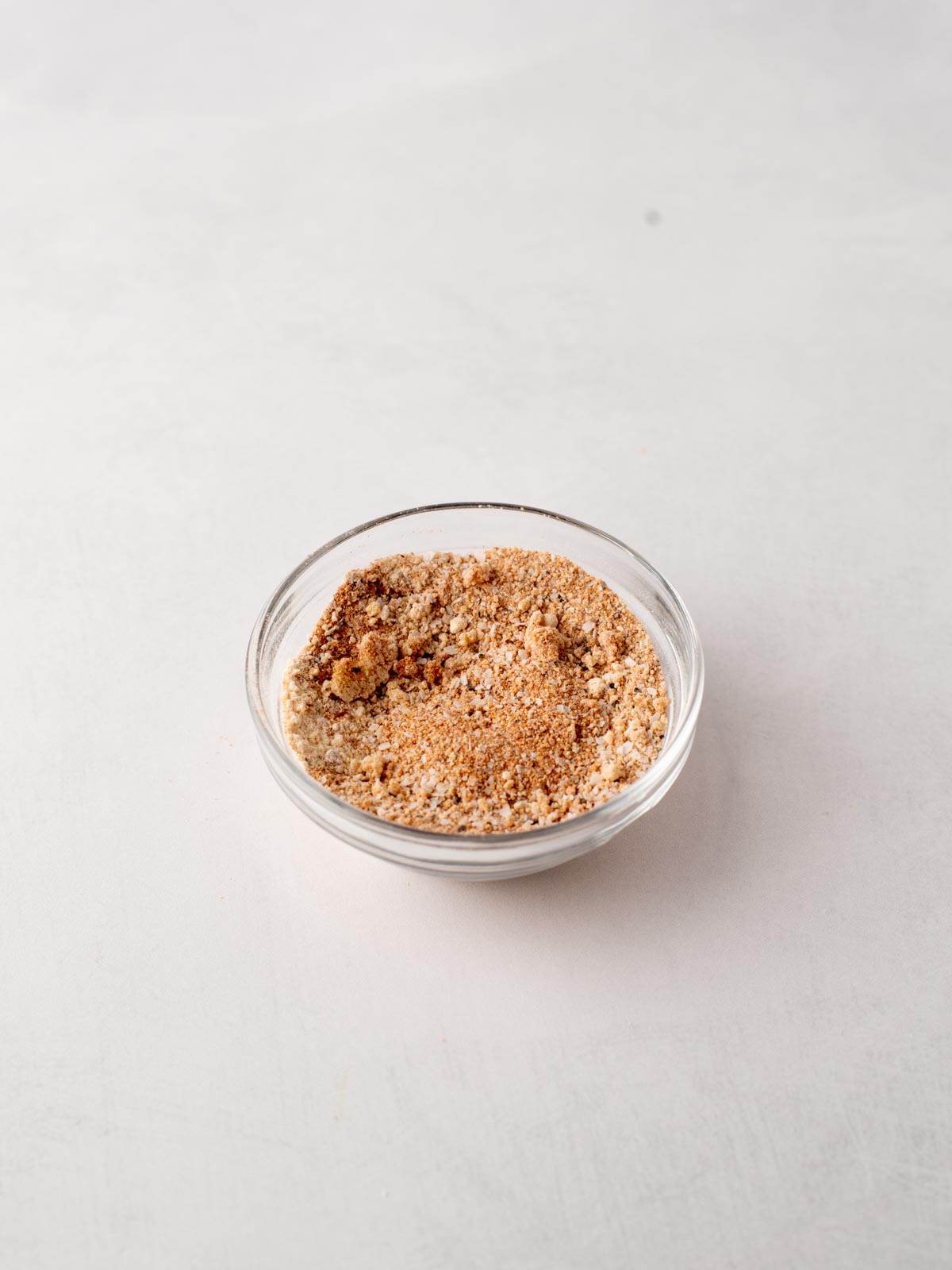
Combine the kosher salt, smoked paprika, garlic powder, onion powder, chili powder, black pepper, brown sugar, mustard powder, and cayenne pepper in a small bowl.
Sprinkle the rub over the chicken and toss until the thighs are evenly coated.
Grill the first side.
Place the chicken directly onto the grill grates. Close the lid and grill for 5 to 6 minutes.
Try not to keep moving the chicken around. Give it time against the hot grates so it can actually brown.
Flip and continue grilling.
Flip the thighs and grill for another 4 to 5 minutes.
At this point, the outside should have good color and the chicken should be getting close to done.
Add the barbecue sauce.
Brush the chicken with barbecue sauce, then flip it and brush the other side.
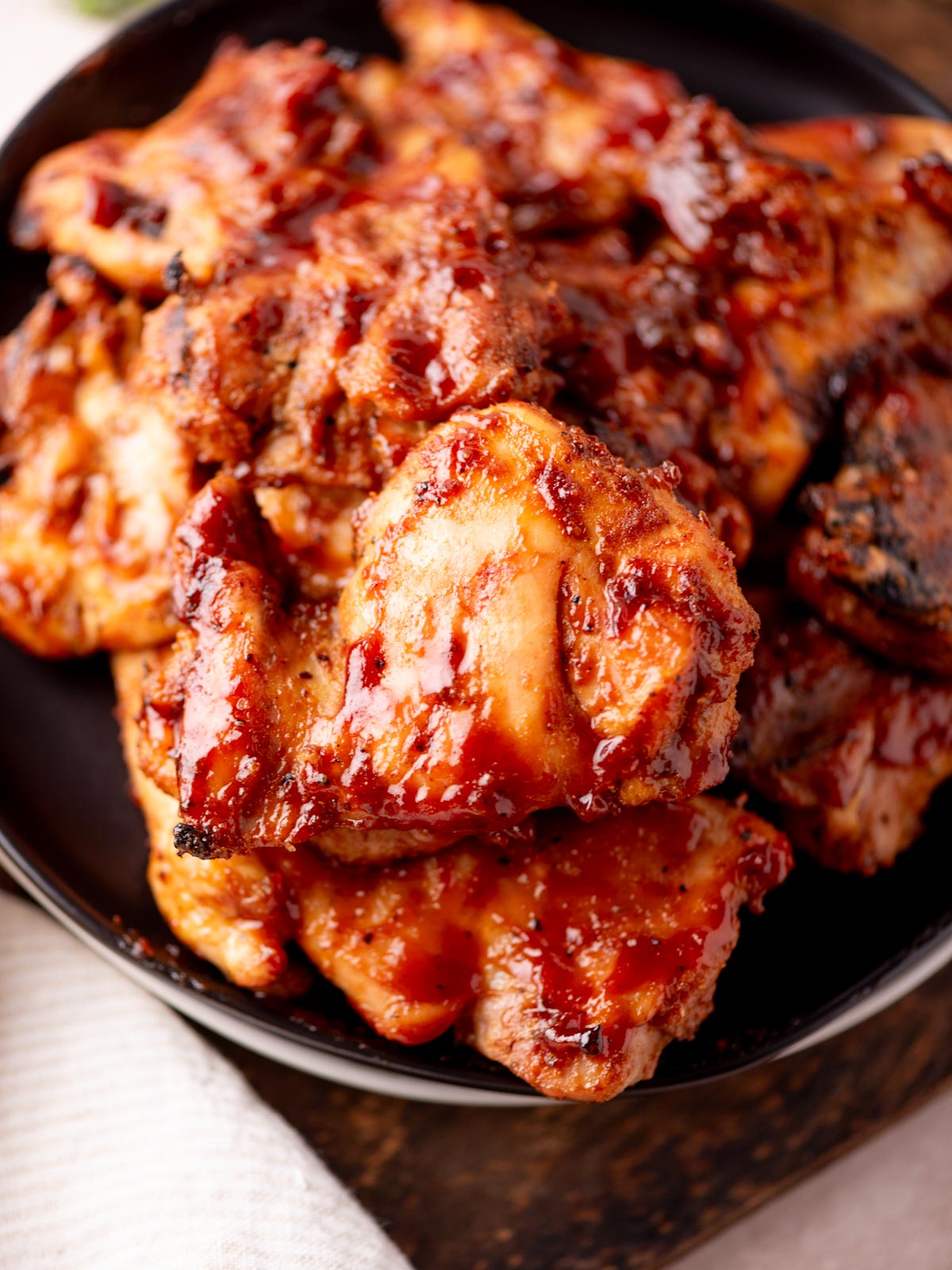
Continue grilling for 1 to 2 minutes per side, adding more barbecue sauce as desired. You’re looking for the sauce to turn sticky and lightly caramelized around the edges.
Rest before serving.
Remove the chicken from the grill once it reaches an internal temperature of 165°F.
Let it rest for 5 minutes before serving.
What Temperature Should Grilled Chicken Thighs Be?
Boneless chicken thighs are done when the thickest part reaches 165°F. Because thighs stay juicy well, they’re more forgiving than chicken breasts, but I still use an instant-read thermometer rather than guessing by color.
Tips for Grilled Chicken Thighs
- Don’t put the barbecue sauce on too early. This is probably the biggest thing I’d watch with this recipe. The sugar in barbecue sauce can go from caramelized to burnt pretty fast over a 400°F grill. Let the dry rub do the work first and save the sauce for the end.
- Use a thermometer instead of guessing by color. Chicken thighs can still look a little pinkish in places even when they’re safely cooked. Check the thickest part of the thigh and pull them once they reach 165°F.
- Watch thinner pieces. Boneless thighs are rarely identical. If one is noticeably smaller or thinner than the others, check it first rather than leaving everything on the grill until the biggest piece is done.
- Give the grill time to recover between batches. If you’re doubling the recipe, don’t crowd every piece onto the grill at once. A packed grill loses heat quickly, and instead of getting good browning, the chicken can start steaming.
What to Serve with BBQ Chicken Thighs
This is exactly the kind of dinner I want with cold sides already waiting in the refrigerator while the chicken cooks outside.
Serve it with:
- Black Bean Corn Feta Dip and tortilla chips
- Bacon Ranch Pasta Salad
- Corn on the cob
- Baked beans
- Potato salad
- Coleslaw
- Watermelon or sliced summer fruit
- Grilled vegetables
For a simple weeknight dinner, I’d add corn and one cold side and call it done. For a cookout or football Saturday, put out a few sides and let everybody build their own plate.
How to Make It Ahead
You can mix the dry rub ahead of time and keep it in an airtight container until you’re ready to cook.
You can also season the chicken earlier in the day and keep it covered in the refrigerator until grilling time. Keep the barbecue sauce separate and don’t brush it onto the chicken until the end of grilling.
How to Store Boneless Grilled Chicken Thighs
Refrigerator
Store leftover BBQ chicken thighs in an airtight container in the refrigerator for up to 3 to 4 days.
Keep any extra barbecue sauce separate unless it has not come into contact with raw chicken.
How to Reheat BBQ Chicken Thighs
Oven
The oven is my first choice because it warms the chicken without drying the outside as quickly. Place the thighs in a covered baking dish and reheat at 325°F until warmed through.
You can brush a little additional barbecue sauce over the chicken before reheating if it needs it.
Microwave
For one or two pieces, the microwave works fine. Heat in short intervals until warmed through rather than giving it several minutes at once, which can make chicken thighs rubbery.
Frequently Asked Questions
It probably went on too soon or the grill was too hot once the sauce was added. Most barbecue sauces contain sugar, which burns fairly quickly over direct heat. For this recipe, let the chicken almost completely cook before brushing on the sauce. The final minute or two on each side is enough to make it sticky and caramelized.
Not particularly. The chili powder gives them seasoning more than heat, and the cayenne is optional. If you’re cooking for kids or anyone sensitive to spice, leave out the cayenne.
Start with properly preheated grill grates and don’t try to flip the chicken too soon. Once the first side has browned, it usually releases from the grates much more easily.
This recipe and its grilling times are written specifically for boneless skinless chicken thighs. Bone-in thighs take considerably longer to cook, so I wouldn’t use the timing in this recipe for them.
More Recipes for the Grill
- Grilled Burgers
- Grilled Pork Chops
- Greek Grilled Chicken Skewers
- Smoked Chicken Thighs
- Beer Can Chicken
Pin this now to find it later
Pin It
BBQ Grilled Chicken Thighs
Ingredients
Chicken
- 2 pounds boneless skinless chicken thighs
- 1 tablespoon olive oil
Dry Rub
- 2 teaspoons kosher salt
- 2 teaspoons smoked paprika
- 1 teaspoon garlic powder
- 1 teaspoon onion powder
- 1 teaspoon chili powder
- 1 teaspoon black pepper
- 1 teaspoon brown sugar
- 1/2 teaspoon mustard powder
- 1/4 teaspoon cayenne pepper optional
BBQ Sauce
- 3/4 cup barbecue sauce
Instructions
- Preheat the grill to medium-high heat, around 400°F.
- Pat the chicken thighs dry with paper towels, then place them in a large bowl. Drizzle with olive oil and toss to coat.
- In a small bowl, combine the kosher salt, smoked paprika, garlic powder, onion powder, chili powder, black pepper, brown sugar, mustard powder, and cayenne pepper.
- Sprinkle the seasoning mixture evenly over the chicken thighs and toss until fully coated.
- Place the chicken thighs directly onto the grill grates. Grill for 5-6 minutes on the first side with the lid closed.
- Flip the chicken and continue cooking for another 4-5 minutes.
- Once the chicken is nearly cooked through, brush a layer of barbecue sauce over the chicken. Flip and brush the other side. Continue grilling for 1-2 minutes per side, brushing with more sauce as desired, until the sauce becomes sticky and lightly caramelized.
- Remove the chicken from the grill once it reaches an internal temperature of 165°F. Let the chicken rest for 5 minutes before serving.
Video
Notes
- Barbecue sauce: Use a thicker barbecue sauce you already like since the flavor is prominent and it will cling to the chicken better on the grill.
- Cayenne: Optional. Leave it out for a milder version.
- Don’t sauce too early: Wait until the chicken is nearly cooked through before brushing on the barbecue sauce so the sugars don’t burn.
- Chicken size varies: Smaller or thinner thighs may finish a little sooner, so check them individually with an instant-read thermometer.
- Doneness: Remove the chicken from the grill once the thickest part reaches 165°F.
Nutrition
Nutrition information is automatically calculated, so should only be used as an approximation.