
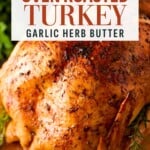
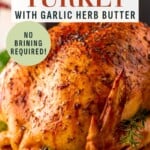
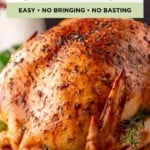
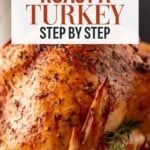
This oven roasted turkey has golden, browned skin and juicy meat without brining or spending Thanksgiving morning basting it every half hour. Starting it in a hot oven gives the skin a head start before lowering the temperature to finish roasting. It’s a straightforward way to get a beautiful Thanksgiving turkey on the table while you’ve got a dozen other things going on in the kitchen.
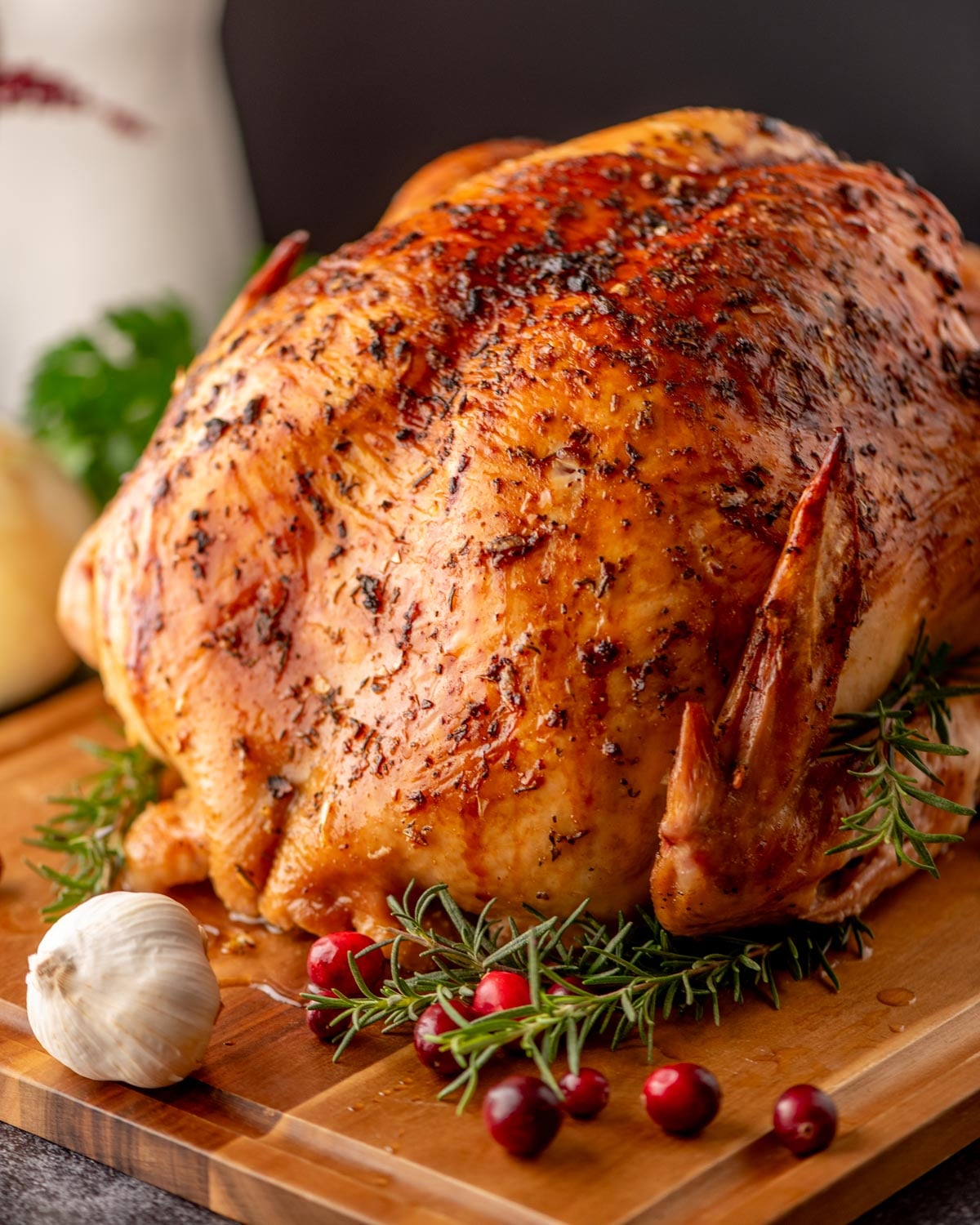
Thanksgiving dinner has enough moving parts without adding a brine or having to keep babysitting the oven to baste the turkey. I’ve always preferred a straightforward approach to cooking a whole turkey, but that doesn’t mean I’m willing to give up good browning or juicy meat. Starting at 500°F and then dropping to 350°F gives the skin a chance to brown early while the rest of the turkey finishes cooking.
When I tested this method with a 20-pound turkey, it took right around four hours in the oven. I covered the breasts loosely with foil about halfway through because they were already browned. You want browned skin, but you don’t want it to get too dark while the thighs are still cooking.
I also let that turkey rest for almost an hour before carving. Giving a whole turkey that time makes carving easier and gives you a little breathing room to finish everything else for dinner. The biggest thing I want you to take away from this recipe is to pay attention to the temperature and how the turkey looks instead of relying on a roasting chart alone. A 20-pound turkey may have taken four hours in my oven, but yours could take more or less time.
Why You’ll Love This Recipe
- No brining required. You don’t have to find room in the refrigerator for a turkey sitting in a bucket of brine for two days.
- No constant basting. Once the turkey goes into the oven, you can focus on getting the rest of Thanksgiving dinner ready instead of opening the oven every 30 minutes.
- Beautifully browned skin. Starting at a higher temperature gives the skin a head start on browning before the turkey finishes roasting at a lower temperature.
- Juicy meat without guessing. Cooking to the right internal temperature instead of relying strictly on time helps keep the breast meat from drying out.
What Size Turkey Do You Need?
A good rule of thumb is to plan for 1 to 1½ pounds of whole turkey per person, depending on how much you want left over after Thanksgiving dinner.
- 1 pound per person is usually enough for dinner with minimal leftovers
- 1½ pounds per person gives you more generous portions and extra turkey for sandwiches, soups, and casseroles.
Turkey Size Guide for How Many People You’re Feeding
| Turkey Size | Number of People |
| 8-10 pounds | 6-8 people |
| 12-14 pounds | 8-10 people |
| 15-16 pounds | 10-12 people |
| 18-20 pounds | 12-14 people |
These estimates leave some room for leftovers, but if you’re planning on several days of leftover turkey, aim for the higher end of the 1 to 1½ pounds per person range.
For larger gatherings, consider roasting two smaller turkeys instead of one very large bird. They’re easier to handle, cook more evenly, and give you more flexibility with oven space and timing.
Ingredients for Oven Roasted Turkey
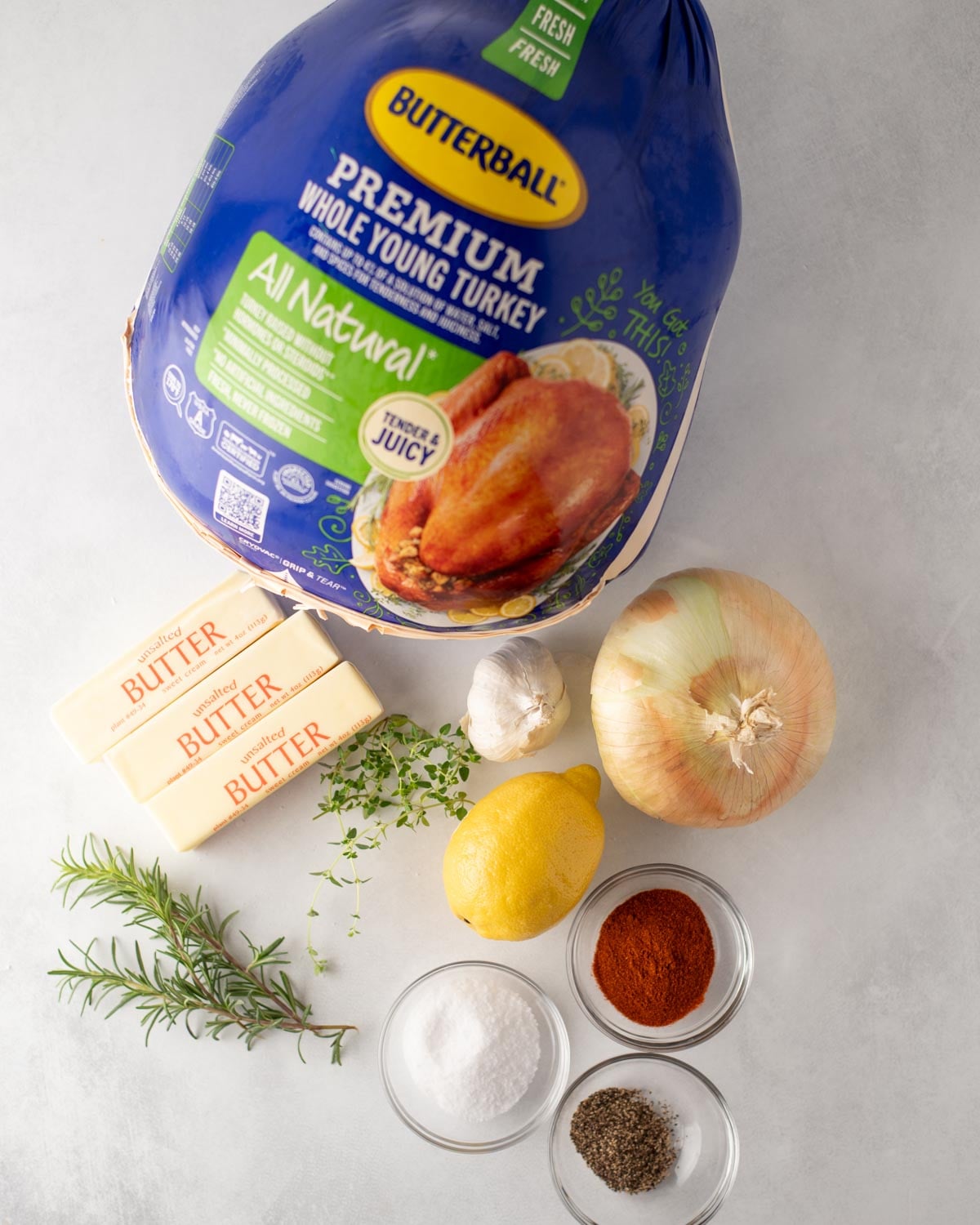
Turkey and Herb Butter
- Whole turkey: This recipe was tested with a 20-pound turkey. You can use a smaller turkey, but the cooking time and amount of herb butter may need adjusting. Look for a natural turkey without added salt solutions when possible so you have more control over the seasoning.
- Unsalted butter: I prefer unsalted so I can control how much salt goes into the herb butter. The butter keeps the meat moist and helps the outside brown.
- Fresh garlic: Freshly minced garlic goes into the herb butter, so you get garlic throughout the turkey instead of only seasoning the outside.
- Fresh thyme and rosemary: These give the turkey that familiar Thanksgiving herb flavor. Fresh herbs work especially well in the butter since they’re going directly against the meat.
- Paprika: Gives the butter a little color and helps the outside develop that golden-brown finish.
- Coarse Kosher salt: Seasons the herb butter and the turkey itself. If your turkey has already been treated with a salt solution, you’ll want to account for that before adding more.
- Black pepper: Adds a little warmth to the herb butter and seasons the outside of the turkey.
Aromatics
- Yellow onion: A good all-purpose onion for roasting. There’s no need to use anything fancy here.
- Lemon: Adds a little citrus aroma inside the turkey without making the meat taste lemony.
- Whole garlic head: Roasts inside the cavity alongside the onion and herbs.
- Fresh thyme and rosemary sprigs: These go inside the turkey cavity separately from the chopped herbs in the butter.
How to Roast a Turkey
- Preheat to 500°F and position the oven rack low enough that the turkey won’t touch the top of the oven.
- Remove the neck and giblets, checking both cavities. Pat the fully thawed turkey very dry with paper towels, inside and out. Place it breast-side up on a rack in a large roasting pan.
- In a mixing bowl, mix the softened butter with the minced garlic, chopped thyme, rosemary, paprika, kosher salt, and black pepper until everything is evenly combined.
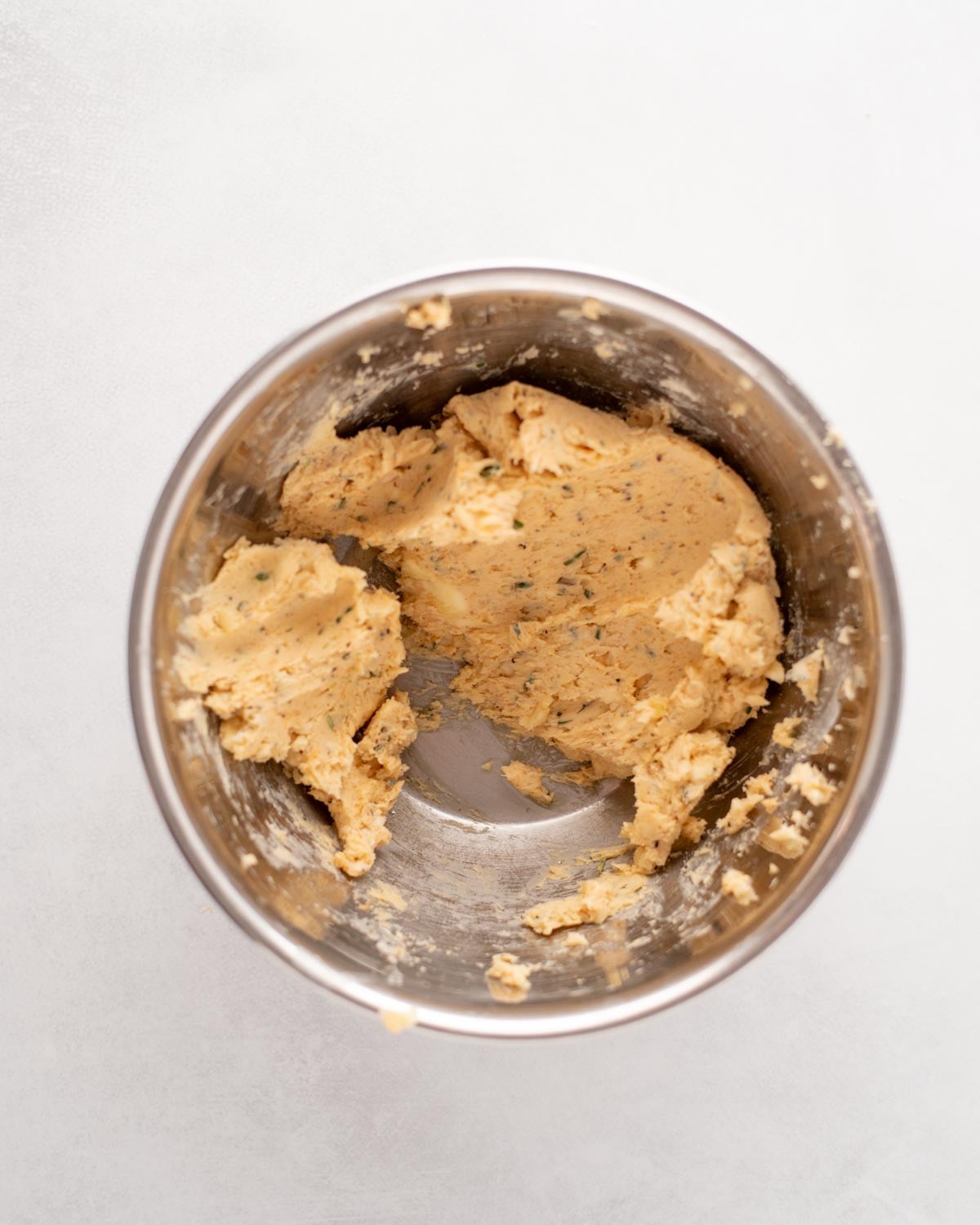
- Carefully loosen the skin over the breasts and around the thighs where you can reach without tearing it. Spread about two-thirds of the herb butter underneath the skin, directly against the meat. Spread the remaining butter over the outside, then season the exterior and cavity with additional salt and pepper as needed.
- Loosely place the quartered onion, lemon halves, garlic head, and fresh thyme and rosemary sprigs inside the cavity. Don’t pack everything in tightly.
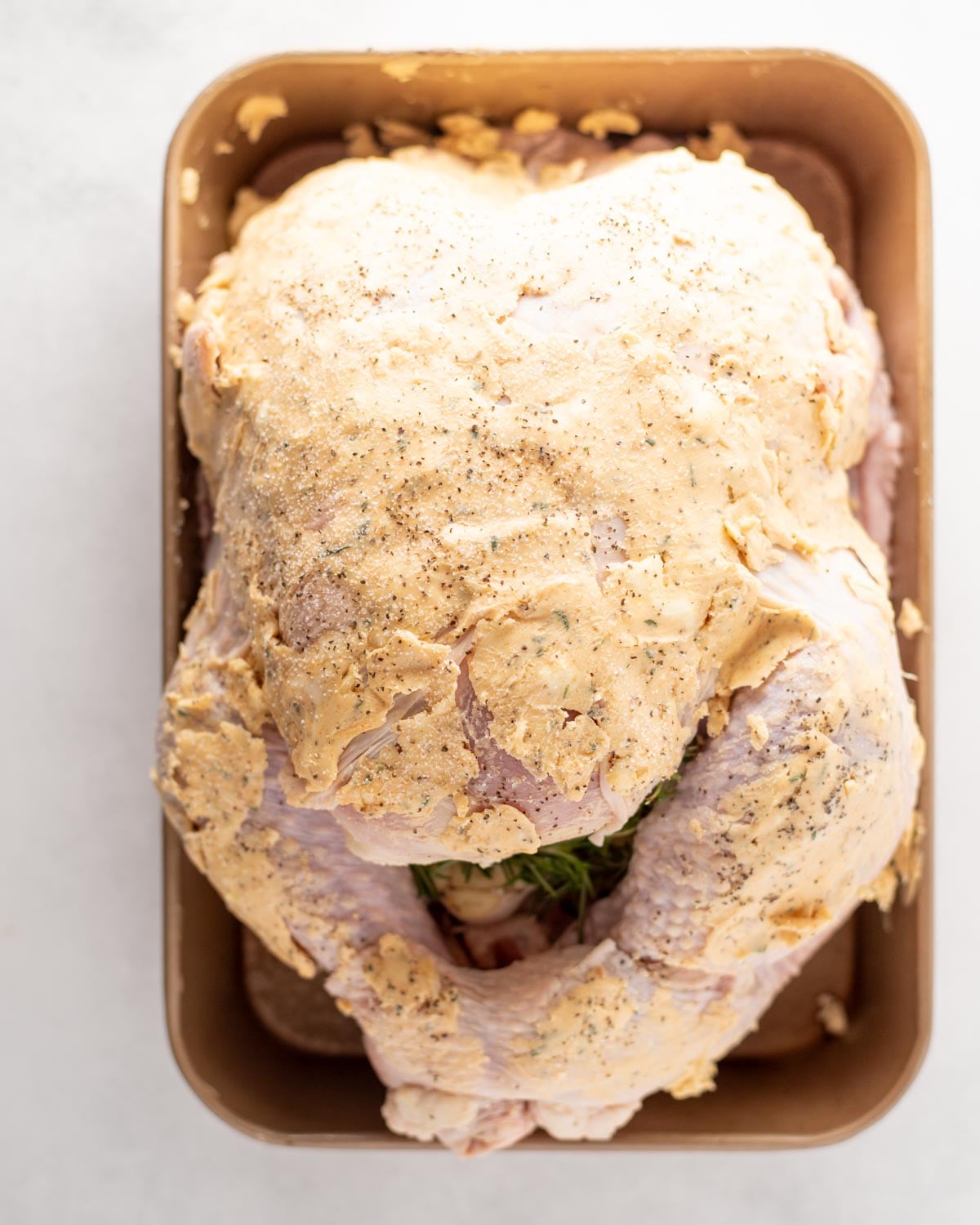
- Roast the turkey uncovered at 500°F for 30 minutes. Without removing it from the oven, lower the temperature to 350°F and continue roasting. There’s no need to baste.
- Watch the browning. If the breasts are getting too dark before the turkey finishes cooking, loosely cover that area with foil. I tented mine around the two-hour mark when testing the 20-pound turkey.
- Check for doneness. Use a meat thermometer to check the thickest part of the breast and the innermost thigh and wing, without touching bone. All three should reach at least 165°F. The thighs can reach 170–175°F for a more tender texture.
- Remove the turkey from the oven, loosely tent it with foil, and let it rest for 30–60 minutes before carving. Remove the aromatics and save the pan drippings for homemade turkey gravy.
Kara’s Tips
- Use a spoon or small spatula for the butter. Softened butter doesn’t always want to stick to turkey skin, especially when you’re trying to spread it with your hands. I found that a spoon or small spatula makes it much easier to get the butter where you want it without fighting with it since warm hands work against you.
- Make sure your turkey is completely thawed. A 20-pound turkey can take about 5 days to thaw in the refrigerator, so plan ahead. If the center is still frozen when it goes into the oven, the outside can overcook before the inside is done.
- Check whether your turkey is already salted. Some turkeys come injected with a salt solution or are labeled self-basting. Since the herb butter already contains salt, you don’t want to accidentally oversalt the turkey.
- Give yourself more time than you think you’ll need. My 20-pound turkey took about four hours to roast, but I wouldn’t plan Thanksgiving dinner around it coming out of the oven at exactly four hours. Every oven is different, and a turkey that’s ready early is much easier to deal with than one that’s still cooking when everyone is ready to eat.
- Don’t underestimate how heavy a roasting pan gets. A 20-pound turkey, roasting rack, and hot pan drippings are a lot to handle. Use a sturdy roasting pan with good handles, and make sure you have a clear, heat-safe place to set it before taking it out of the oven.
How Long to Cook a Turkey in the Oven
How long your turkey takes to roast depends on its size, your oven, and how completely it’s thawed. This recipe starts at 500°F for 30 minutes before lowering the temperature to 350°F, so cooking times may differ from traditional turkey roasting charts.
The chart below gives you a general starting point for planning Thanksgiving dinner.
| Turkey Weight | Approximate Roasting Time at 325°F |
|---|---|
| 8–12 pounds | 2 hours 45 minutes–3 hours |
| 12–14 pounds | 3–3 hours 45 minutes |
| 14–18 pounds | 3 hours 45 minutes–4 hours 15 minutes |
| 18–20 pounds | 4 hours 15 minutes–4 hours 30 minutes |
| 20–24 pounds | 4 hours 30 minutes–5 hours |
My 20-pound turkey took approximately 4 hours total using the 500°F/350°F roasting method in this recipe.
Use these times to plan your day, not to determine when your turkey is done. Start checking the internal temperature before the estimated finish time, and don’t remove the turkey until the thickest part of the breast, innermost thigh, and wing have all reached at least 165°F.
Remember to allow another 30–60 minutes for resting before carving.
How to Tell When Your Turkey Is Done
The most reliable way to tell when your turkey is done is with a meat thermometer. Don’t rely on the skin color, the pop-up timer that comes with some turkeys, or the roasting time alone.
Check the temperature in three places:
- Breast: Insert the thermometer into the thickest part of the breast, without touching bone. It should reach 165°F.
- Thigh: Check the innermost part of the thigh, away from the bone. It needs to reach at least 165°F, although I prefer the thighs closer to 170–175°F for more tender dark meat.
- Wing: Check the innermost part of the wing. It should reach at least 165°F.
If one area hasn’t reached the proper temperature, the turkey needs more time in the oven, even if the other areas are done.
Once all three areas have reached a safe temperature, remove the turkey and let it rest before carving.
How to Rest and Carve a Turkey
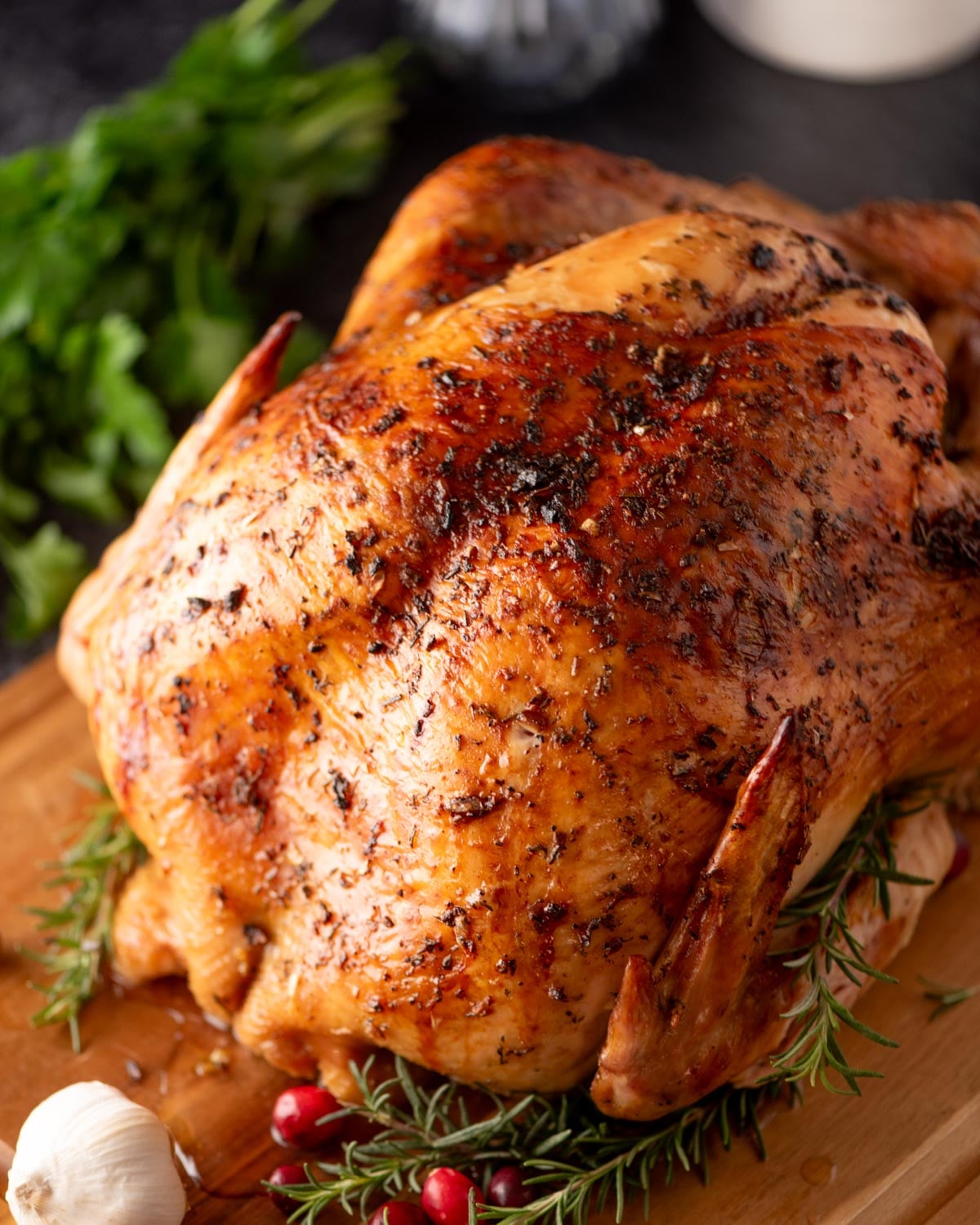
Once your turkey reaches the proper internal temperature, remove it from the oven and loosely cover it with aluminum foil. Let it rest for 30–60 minutes before carving.
I rested my 20-pound turkey for almost an hour, and it turned out great. Resting lets the juices settle so they don’t run all over the cutting board when you start slicing. It also gives you time to finish the gravy, warm up the rolls, and get everything else on the Thanksgiving table.
How to Carve the Turkey
- Remove the legs and thighs. Place the turkey on a large cutting board with a groove to catch the juices. Cut through the skin between each leg and the breast, then gently pull the leg outward to find the joint. Cut through the joint to remove the leg and thigh together.
- Separate the drumsticks and thighs. Find the joint connecting each drumstick to the thigh and cut through it.
- Remove the wings. Pull each wing away from the body and cut through the joint where it connects to the breast.
- Remove the breast meat. Run your knife along one side of the breastbone, following the rib cage to remove the breast in one piece. Repeat on the other side.
- Slice and serve. Cut the breast meat across the grain into slices and arrange it on a serving platter with the legs, thighs, and wings.
How to Store Leftover Turkey
Refrigerator: Remove the meat from the bones and store it in airtight containers in the refrigerator for up to 3–4 days. Separate larger amounts into smaller, shallow containers so the turkey cools quickly. Make sure leftovers are refrigerated within 2 hours.
Freezer: Leftover turkey freezes really well! Remove the meat from the bones and divide it into portions you’ll actually use. Store in freezer-safe bags or airtight containers, removing as much air as possible. For the best quality, use within 2–3 months.
I personally get a little tired of turkey after a while, so freezing it for later is a great way to avoid burnout from eating so many leftovers.
How to Reheat Turkey Without Drying It Out
Oven (best for larger portions): Preheat the oven to 325°F. Place the turkey in a baking dish with a splash of chicken or turkey broth, then cover tightly with foil. Heat until the turkey reaches 165°F internally.
Microwave (best for individual servings): Place sliced turkey on a microwave-safe plate with a splash of broth. Cover and heat in short intervals until it reaches 165°F, checking to make sure it heats evenly.
The biggest thing is to keep some moisture around the meat as it reheats. Turkey breast is especially easy to dry out, so I prefer adding a little broth rather than reheating it uncovered.
Frequently Asked Questions
No, start roasting the turkey uncovered so the skin can brown. If the breasts start getting too dark before the turkey is fully cooked, loosely cover just that area with foil. When I tested my 20-pound turkey, I added foil around the two-hour mark.
No, this recipe doesn’t require adding liquid to the roasting pan. The turkey will release juices as it cooks, which you can save for making gravy. If the drippings start burning or smoking, you may need to add a small amount of water to the pan.
If it’s only going to be a short wait, keep the turkey loosely covered while it rests. For longer delays, you’ll need to keep it at 140°F or warmer or refrigerate it within the two-hour food safety window. Don’t leave a cooked turkey sitting on the counter for several hours.
Yes, you can remove the giblets, dry the turkey, and prepare the herb butter the night before. Keep everything refrigerated, and make sure the turkey stays at 40°F or below. You can also prepare the aromatics ahead of time, but wait until just before roasting to put them inside the cavity.
More Thanksgiving Recipes
Once you’ve got the turkey handled, here are a few more recipes to help round out your Thanksgiving table.
- Turkey Gravy from Drippings – Put those turkey drippings to good use with homemade gravy.
- Southern Mashed Potatoes – Creamy Yukon gold mashed potatoes with plenty of butter.
- Grandma’s Green Bean Casserole – A cheesy Southern version of the holiday classic.
- Sweet Potato Casserole with Marshmallows – Creamy sweet potatoes topped with brown sugar streusel and toasted marshmallows.
- Homemade Cranberry Sauce – Made with whole cranberries, orange, and cinnamon.
- Honey Butter Dinner Rolls – Soft homemade rolls finished with honey butter.
Pin this now to find it later
Pin It
Oven Roasted Turkey
Ingredients
Turkey and Herb Butter
- 1 20lb whole turkey fully thawed
- 1½ cups unsalted butter softened
- 6 cloves garlic finely minced
- 2 tablespoons fresh thyme finely chopped
- 2 tablespoons fresh rosemary finely chopped
- 1½ teaspoons paprika
- 2 teaspoons kosher salt for the herb butter
- 1 teaspoon ground black pepper for the herb butter
- Additional kosher salt and black pepper for seasoning the exterior and cavity
Aromatics
- 1 large yellow onion quartered
- 1 whole lemon halved
- 1 head garlic halved crosswise
- 3 sprigs fresh thyme
- 3 sprigs fresh rosemary
Instructions
- Preheat the oven to 500°F. Position the oven rack low enough to accommodate the turkey and roasting pan without touching the top of the oven. Allow the oven to fully preheat.
- Remove the neck and giblets from the fully thawed turkey, checking both cavities. Pat the turkey very dry inside and out with paper towels. Place it breast-side up on a roasting rack inside a large roasting pan.
- In a medium bowl, combine the softened butter, minced garlic, chopped thyme, rosemary, paprika, 2 teaspoons kosher salt, and 1 teaspoon black pepper. Mix until evenly combined.
- Gently loosen the skin over the turkey breasts with your fingers, being careful not to tear it. Loosen the skin around the thighs where accessible. Spread approximately two-thirds of the herb butter directly onto the meat underneath the skin, concentrating on the breasts.
- Spread the remaining herb butter over the breasts, legs, and wings. A spoon or small spatula works well if the butter sticks to your hands instead of the skin. Season the exterior and cavity with additional kosher salt and black pepper as needed, accounting for any salt already added by the manufacturer.
- Loosely place the quartered onion, lemon halves, halved garlic head, and fresh thyme and rosemary sprigs inside the cavity. Don’t pack them tightly. Leave enough room for heat to circulate.
- Place the turkey in the preheated 500°F oven and roast uncovered for 30 minutes.
- Without removing the turkey, reduce the oven temperature to 350°F. Continue roasting until the turkey reaches the proper internal temperature. There’s no need to baste.
- If the breast skin begins browning too quickly, loosely cover just the breast area with aluminum foil. During testing, I tented the breasts approximately 2 hours into roasting to prevent them from getting too dark.
- Continue roasting until the thickest part of the breast and the innermost thigh and wing reach at least 165°F. For more tender dark meat, the thighs can reach 170–175°F. Avoid touching bone with the thermometer. My 20-pound turkey took approximately 4 hours total, but always rely on internal temperature rather than cooking time.
- Remove it from the oven and loosely tent with aluminum foil. Let it rest for 30–60 minutes before carving.
- Transfer the turkey to a carving board, remove the aromatics, and carve. Reserve the pan drippings for homemade turkey gravy.
Video
Notes
- Turkey size: This recipe was tested with a 20-pound turkey. Smaller or larger birds will have different roasting times, and the herb butter quantity may need adjusting.
- Thawing: Make sure the turkey is completely thawed before roasting. A 20-pound turkey takes approximately 5 days to thaw in the refrigerator.
- Salt: Check the turkey packaging before seasoning. Self-basting or solution-injected turkeys may already contain added salt.
- Butter: If the softened herb butter won’t stick to the outside of the turkey, use the back of a spoon or a small spatula to spread it.
- Roasting: Start at 500°F for 30 minutes, then reduce to 350°F. If the breast skin browns too quickly, tent just the breasts loosely with aluminum foil.
- Doneness: Check the thickest part of the breast and the innermost thigh and wing. All should reach at least 165°F. The thighs can reach 170–175°F for a more tender texture.
- Resting: Let the turkey rest for 30–60 minutes before carving. Save the pan drippings for homemade turkey gravy.
Nutrition
Nutrition information is automatically calculated, so should only be used as an approximation.