


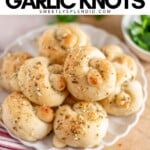


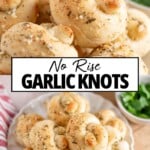
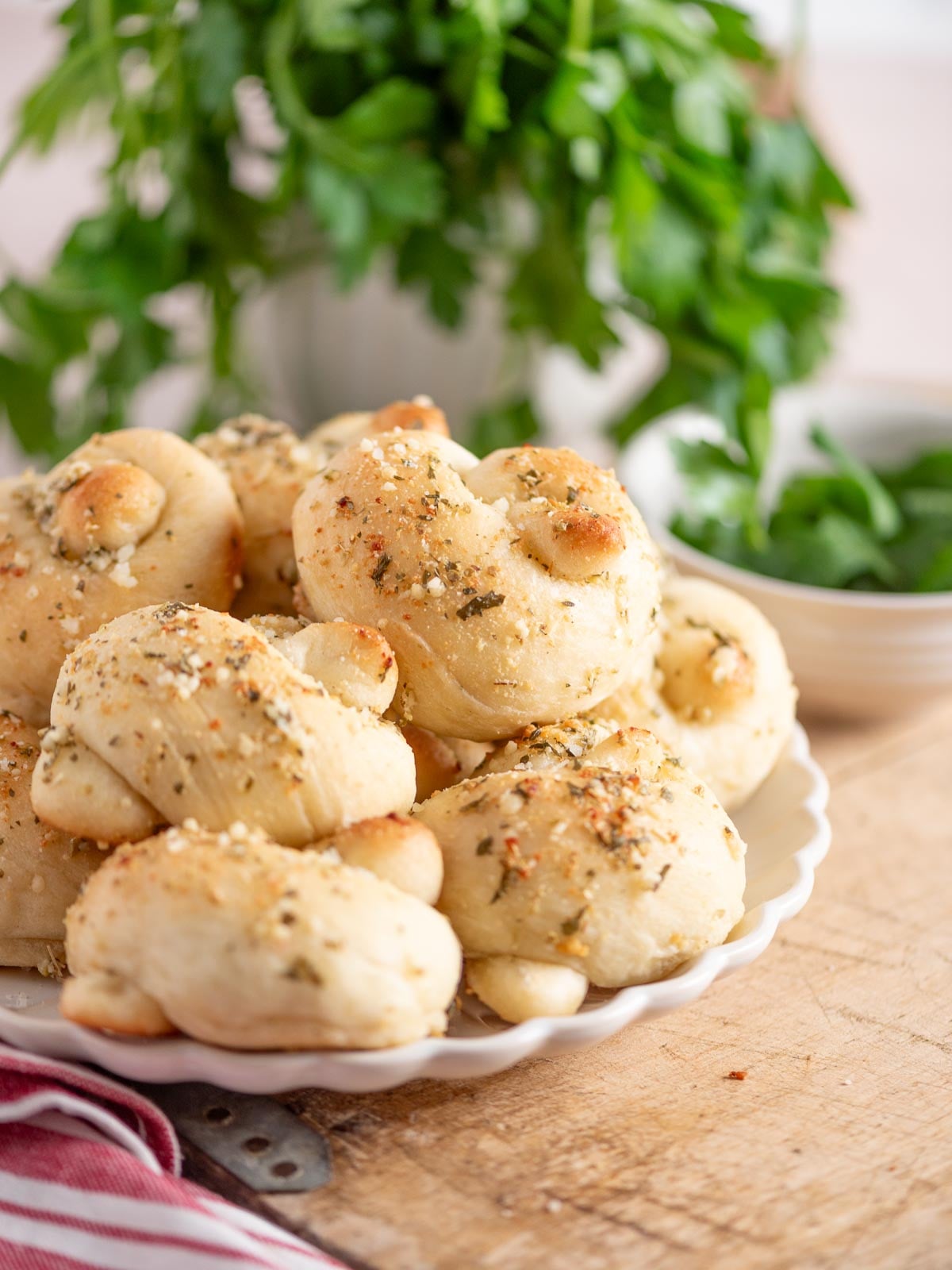
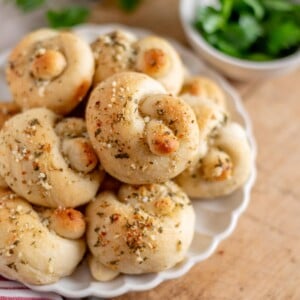
These garlic knots are golden on the outside, soft and fluffy in the middle, and coated in garlic Parmesan butter that gets into all those little folds in the bread. The trick to getting that pizza-shop texture is a shortcut from the freezer aisle, and you don’t even have to wait for the dough to rise.
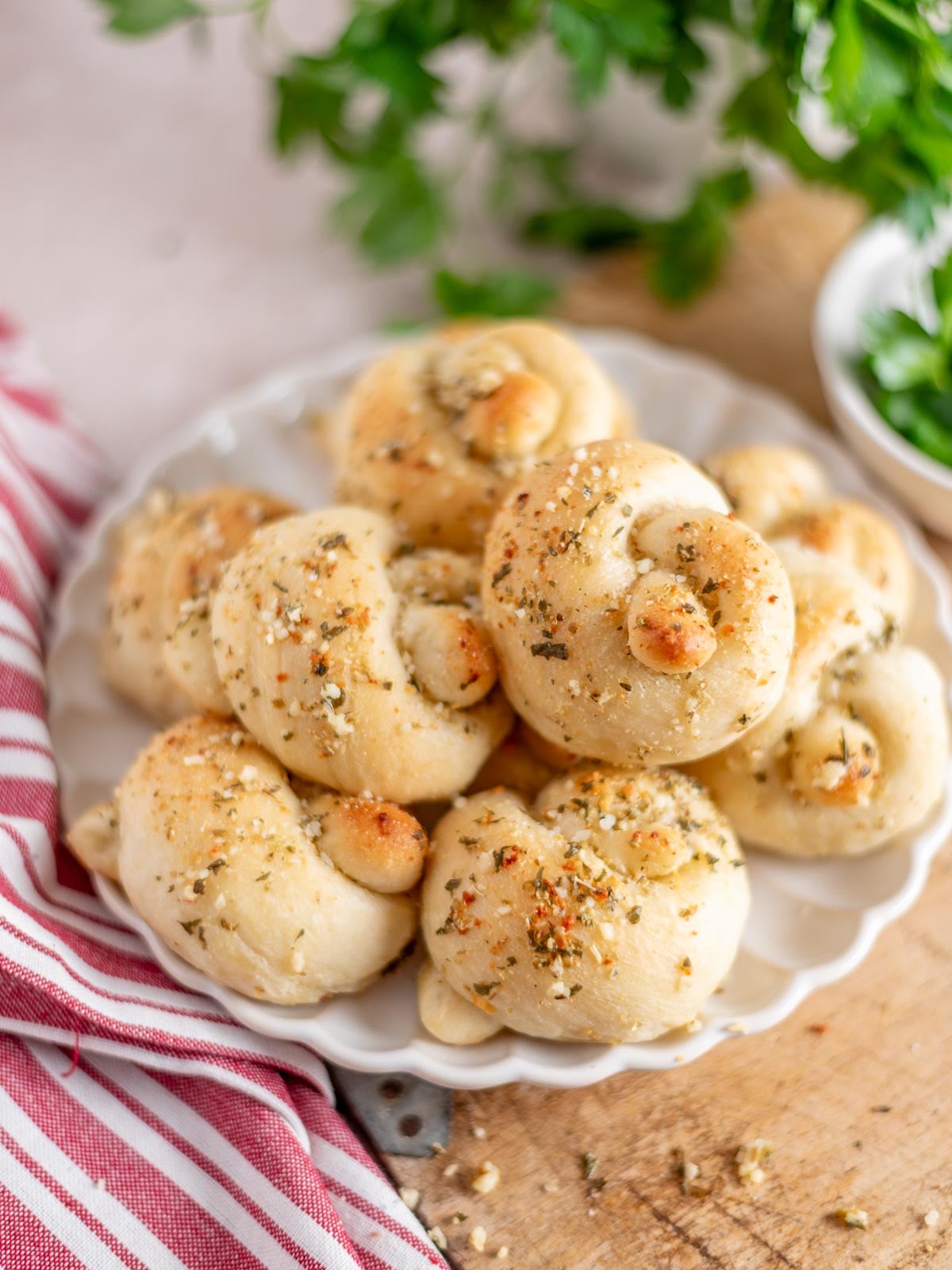
When I first shared this recipe back in 2014, I made these garlic knots with a can of Pillsbury biscuits. It’s still a good option when you need some bread to go with dinner at the last minute, but somewhere along the way, I started using frozen Rhodes dinner rolls, and now that’s the version I’d choose every time. I love that soft, slightly chewy bread you can pull apart with your fingers, and the yeast dough gets you much closer to the garlic knots you’d get at a pizza place.
You don’t need to follow the full rising instructions on the bag of Rhodes rolls for this recipe. I let mine thaw on the counter for about 30-45 minutes, just until they’re soft enough to roll out and tie. They go straight into the oven after shaping and still bake up soft and fluffy.
The garlic Parmesan butter hasn’t changed since I originally shared this recipe. I’m pretty particular about garlic bread having good flavor beyond the very top of it, which is why I brush these with butter twice. The first coating bakes into the bread, and the second goes on while they’re still hot so you get that good, buttery garlic flavor when you pull one apart.
Why You’ll Love These Garlic Knots
- Soft, fluffy centers. Using yeast dinner roll dough gives you that pull-apart bread texture without having to make dough from scratch.
- Double the garlic butter. The knots get brushed before and after baking so you get both the baked-on Parmesan and a buttery finish.
- No separate rising time. Once the dinner rolls are thawed, they’re ready to shape and bake.
- A quicker option when dinner is already going. You can make the same recipe with canned biscuits in about 20 minutes.
Garlic Knots Ingredients
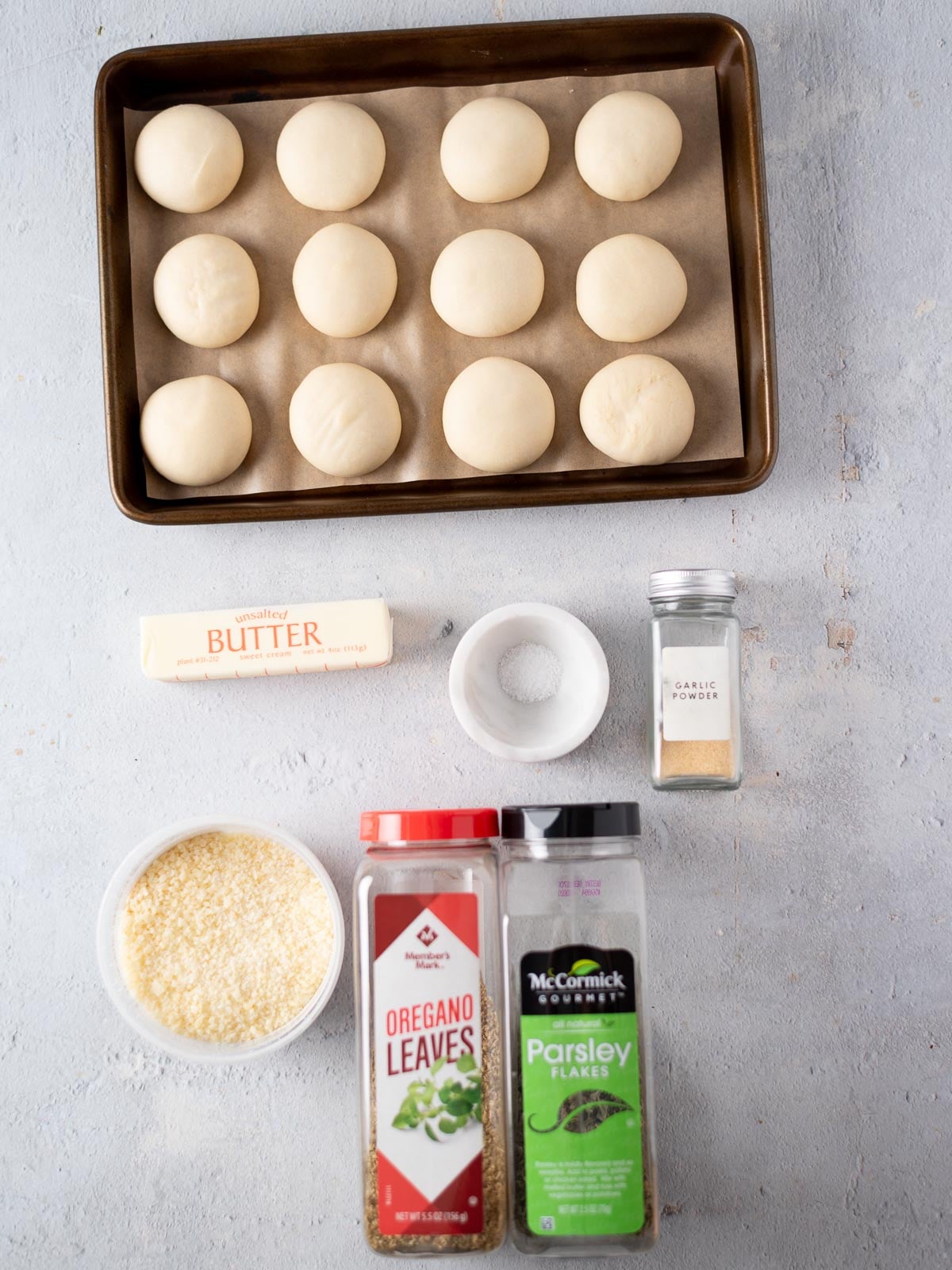
- Frozen dinner rolls: I recommend the regular Rhodes frozen yeast dinner rolls. They’re already portioned into a good size for individual garlic knots and give the bread that soft, fluffy center.
- Canned biscuits (alternative): If you’re not making the dinner roll version, Pillsbury Grands! Flaky Layers biscuits are my choice if you’re making the biscuit version. They’re more buttery and flaky than the yeast rolls.
- Butter: Both salted and unsalted butter work here. I prefer being able to control the salt myself, especially since the Parmesan is salty, too.
- Garlic powder: This is one recipe where I’d choose garlic powder over fresh garlic. It spreads evenly throughout the butter, and you don’t end up with little pieces of burnt garlic on top of the bread.
- Coarse kosher salt: A little salt in the butter makes a big difference in how the finished bread tastes.
- Dried parsley: Dried parsley works well in the butter mixture, so there’s no need to buy a bunch of fresh parsley just for these.
- Dried oregano: This gives the butter some of that familiar Italian garlic bread flavor.
- Parmesan cheese: You’ll want shredded Parmesan for this recipe. Either freshly shredded or the kind that’s already shredded will work.
Making Garlic Knots with Rhodes Rolls or Pillsbury Biscuits
Both doughs work with the same garlic Parmesan butter and baking instructions, but the finished bread will be a little different.
| Rhodes Dinner Rolls | Pillsbury Biscuits | |
|---|---|---|
| Texture | Soft, fluffy yeast bread | Tender, flaky biscuit layers |
| Preparation | Thaw before shaping | Ready straight from the can |
| Yield | 12 garlic knots | 16 smaller garlic knots |
| Total time | About 45 minutes | About 20 minutes |
If you’re heading to the grocery store specifically to make this recipe, I’d put the Rhodes rolls in your cart. If you’ve already got a can of biscuits in the fridge, you can absolutely use those instead.
How to Make Garlic Knots
Step 1: If you’re using frozen Rhodes dinner rolls, let them thaw on the counter for about 45 minutes, or until they’re completely thawed and soft enough to shape.
If you’re making garlic knots with Pillsbury biscuits, remove them from the can and cut each biscuit in half.
Step 2: Preheat the oven to 350°F. Melt the butter and set it aside to cool slightly. Line a baking sheet with parchment paper or a silicone baking mat.
Step 3: Roll each dinner roll or biscuit half into a long rope. Tie the dough into a knot just like you would a piece of string. Place the knots on the prepared baking sheet.
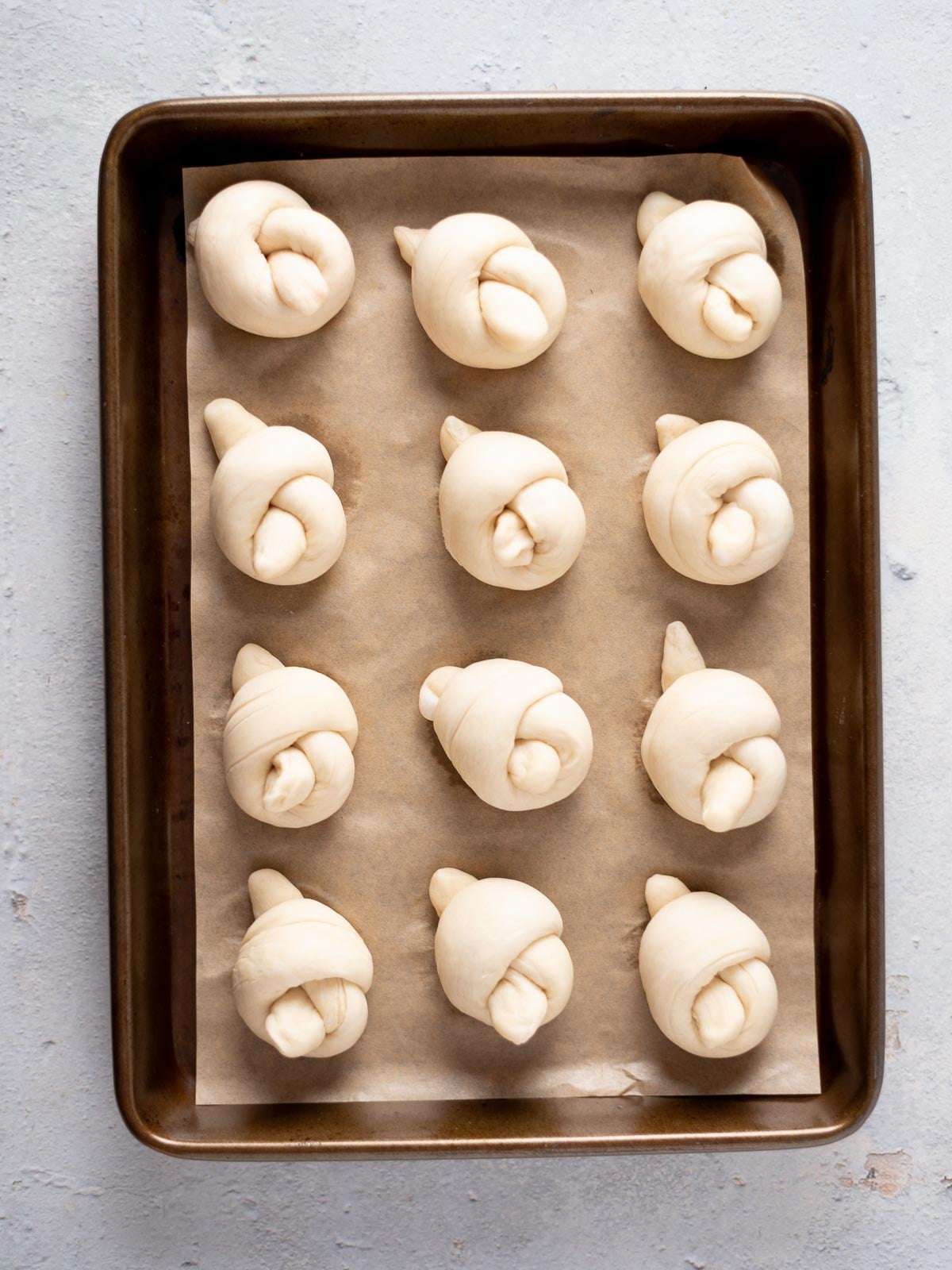
Step 4: Add the garlic powder, kosher salt, dried parsley, oregano, and Parmesan to the melted butter. Stir everything together.
Step 5: Brush about three-quarters of the garlic Parmesan butter over the knots. Bake for 8–12 minutes, until they’re golden on top and cooked through.
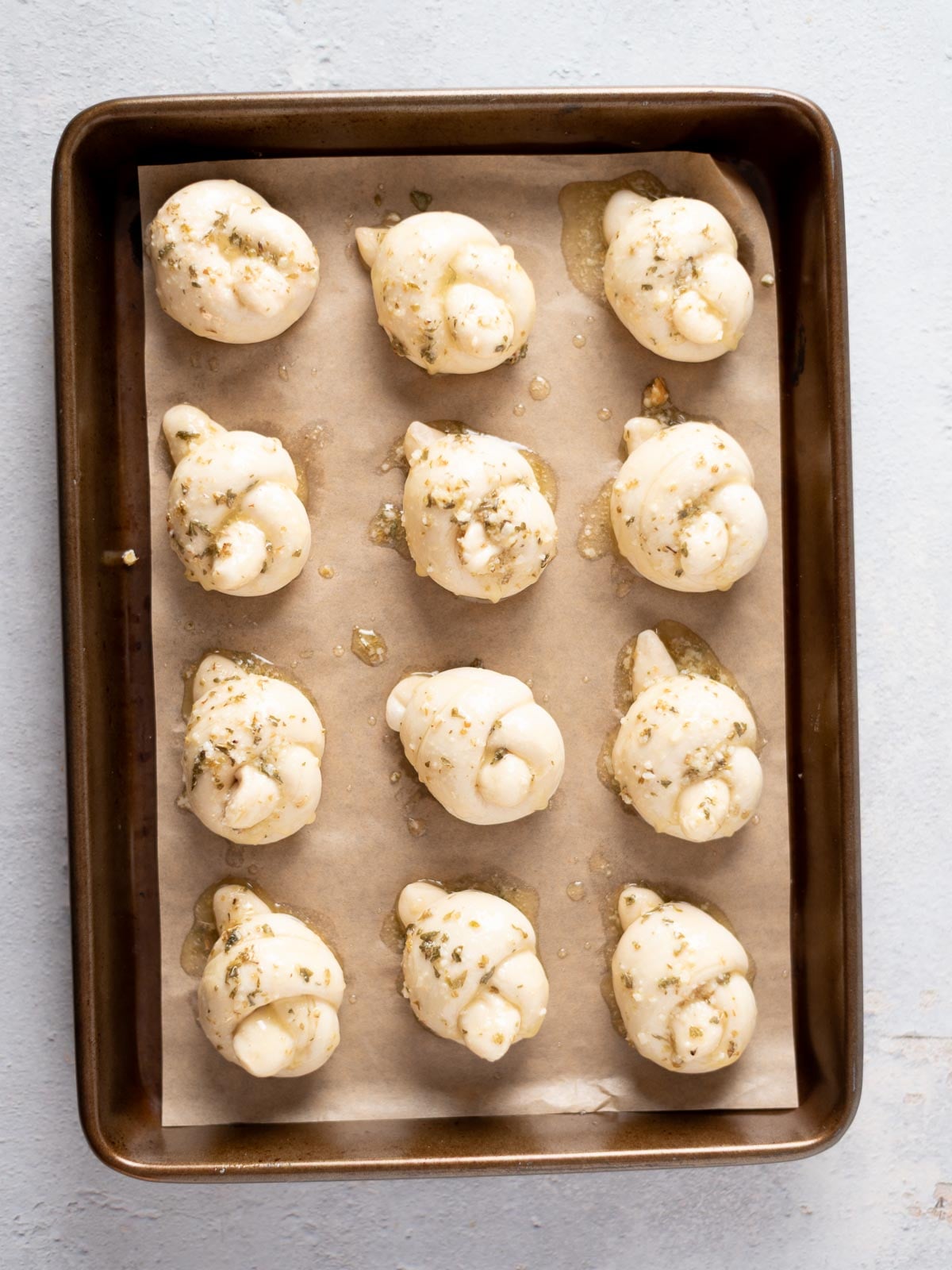
Step 6: As soon as the garlic knots come out of the oven, brush them with the remaining butter mixture. Serve them while they’re still warm.
Kara’s Tips
- If the dough keeps shrinking back, give it a few minutes. Yeast dough can resist stretching, especially when it’s still cold. Letting it rest briefly makes it easier to roll into a rope without tearing it.
- Don’t tie the knots too tight. Leave a little room for the bread to expand as it bakes. You also don’t want a thick, tightly packed center that takes longer to cook than the ends.
- Give the butter a stir between every few knots. The Parmesan and seasonings will settle at the bottom of the bowl. You don’t want the first few knots getting mostly butter and the last few getting all the garlic and cheese.
- Get the sides when you brush on the butter. It’s easy to brush straight across the tops and miss all those little curves and folds in the dough. That’s where you want some of that garlic butter, too.
What to Serve with Garlic Knots
If there’s a good sauce or broth left at the bottom of the bowl, I want some bread to get every last bit of it. These are especially good with pasta and soups, but you can also serve them on their own with a little bowl of warm marinara.
- For pasta night: Baked Spaghetti or Homemade Meatballs with your favorite pasta and red sauce.
- For a cozy soup night: Lasagna Soup, Pasta Fagioli, or Hamburger Soup.
- For a big Sunday dinner: Vegetable Lasagna with a green salad and a basket of warm garlic knots.
- For pizza night: Serve them alongside pizza with marinara or ranch for dipping.
Making Garlic Knots Ahead of Time
You can thaw the Rhodes dinner rolls in the refrigerator overnight if you want to get a head start. Give them a little time on the counter before shaping if the dough is still too cold and firm to work with.
I recommend baking the knots just before you’re ready to eat. They really are best when the bread is still warm and the garlic butter has just been brushed on.
How to Store Garlic Knots
Room temperature
Let the garlic knots cool completely, then store them in an airtight container at room temperature for up to 2 days.
Freezer
You can freeze the baked garlic knots for up to 3 months in a freezer-safe bag or container. Let them cool completely before freezing so condensation doesn’t collect inside the bag.
Thaw them at room temperature before reheating.
How to Reheat Garlic Knots
Microwave: If you’re reheating just one or two garlic knots, pop them in the microwave for about 10 seconds. This is my favorite way to soften them back up without drying out the bread.
Oven: If you’re reheating several at once, wrap them loosely in foil and warm them in a 300°F oven until heated through.
Garlic Knots FAQs
Yes, you can use refrigerated pizza dough to make garlic knots. You’ll need to divide the dough into individual pieces before shaping them. The yield and baking time may be different depending on the size of your knots and the type of pizza dough you use.
They may have been baked too long. The ends of the knots are thinner than the middle and can dry out quickly. Pull them from the oven once the tops are golden and the centers are cooked through rather than waiting for the entire knot to turn a deep brown.
You can, but leave out the added kosher salt if you do. Garlic salt contains considerably less garlic than plain garlic powder, so you won’t get quite the same garlic flavor without also making the butter saltier.
More Bread Recipes You’ll Love
Pin this now to find it later
Pin It
Garlic Knots
Ingredients
- 12 frozen Rhodes dinner rolls (or 8 Pillsbury Grands! Flaky Layers biscuits)
- 4 tablespoons butter
- ¾ teaspoon garlic powder
- ¼ teaspoon coarse kosher salt
- ½ teaspoon dried parsley
- ½ teaspoon dried oregano
- 1½ tablespoons shredded Parmesan cheese
Instructions
- If using frozen Rhodes dinner rolls, let them thaw at room temperature for approximately 30 minutes, or until completely thawed and soft enough to shape. They do not need to rise.
- Melt the butter and set it aside to cool slightly.
- If using canned biscuits, cut each biscuit in half. If using Rhodes dinner rolls, leave each roll whole.
- Roll each piece of dough into a long rope. Tie each rope into a loose knot and place it on the prepared baking sheet.
- Add the garlic powder, kosher salt, dried parsley, dried oregano, and Parmesan cheese to the melted butter. Stir to combine.
- Brush approximately three-quarters of the garlic butter mixture over the knots.
- Bake for 8–12 minutes, until golden on top and cooked through.
- Remove the garlic knots from the oven and immediately brush them with the remaining garlic Parmesan butter. Serve warm.
Video
Notes
- Rhodes frozen dinner rolls are my preferred option for a soft, fluffy garlic knot with a traditional yeast bread texture.
- If using Pillsbury biscuits, skip the thawing step. The biscuit version makes 16 smaller garlic knots and takes approximately 18–22 minutes.
- The time needed to thaw the frozen dinner rolls will vary depending on the temperature of your kitchen. They should be soft and pliable before shaping.
- The Rhodes dinner rolls do not require a separate rise before baking.
- Stir the butter mixture periodically while brushing to keep the Parmesan and seasonings evenly distributed.
- Nutrition information and serving count are based on the Rhodes dinner roll version.
Nutrition
Nutrition information is automatically calculated, so should only be used as an approximation.










Got to try them. Sounds so good.